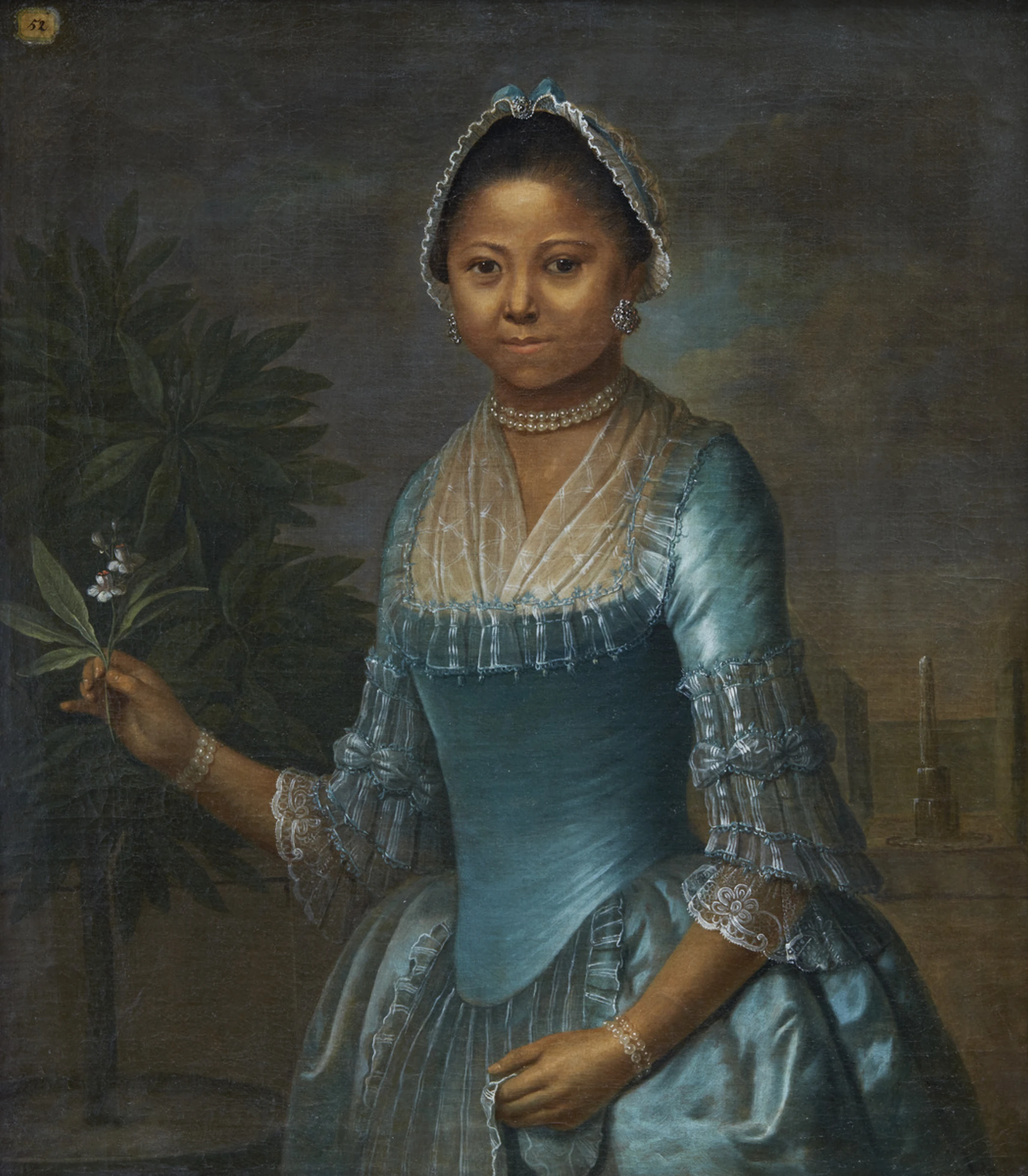
AGO Researchers Identify Sitter and Artist in 1775 Portrait of Eleonora Susette
After years of archival work, the Art Gallery of Ontario identified both the sitter and painter of a portrait now retitled to name Eleonora Susette, reframing a colonial image as a documented life.
The Art Gallery of Ontario has identified both the sitter and the painter of an 18th-century portrait now retitled Portrait of Eleonora Susette (1775), ending a long period in which the work circulated under the generic label Portrait of a Lady Holding an Orange Blossom. The sitter has been identified as Eleonora Susette, a young enslaved woman born in Berbice, in present-day Guyana. The painter has been identified as Jeremias Schultz, a Berlin-born artist active in Dutch colonial mercantile circles. The research outcome shifts the picture from anonymous genre coding to a work anchored in named lives and documented colonial movement.
That shift matters beyond attribution. In museum interpretation, anonymity is rarely neutral. Generic titles for Black sitters in European portraiture often flatten specific biographies into decorative typology, especially where colonial violence structured the circumstances of representation. By naming Eleonora Susette, curators have changed the ethical frame in which audiences encounter the painting. Viewers are no longer invited to read the work as a costume study or period elegance alone, they are asked to confront a transatlantic history of enslavement, forced movement, and social display embedded in the portrait format itself.
The AGO team reportedly worked from fragmentary evidence, including a partial signature and links to a related portrait in private hands, while tracing family and colonial records across jurisdictions. According to the museum's published account, the breakthrough emerged through genealogical contact from descendants tied to the artist’s family, allowing curators to connect sitter, patron network, and migration timeline. This kind of attribution work, slow and often invisible to the public, is becoming one of the most consequential forms of museum labor. It reshapes catalog records, wall labels, education programming, and potentially restitution or provenance discussions in related collections.
The case also highlights how institutional research infrastructures can alter art-historical narrative when they are funded and prioritized. The AGO has been investing in sustained curatorial scholarship and public interpretation, and this finding is a concrete return on that strategy. For peer institutions, the lesson is practical: provenance and identification projects should not be treated as optional back-office tasks. They are central to public trust, especially in collections formed through imperial circuits where records are uneven and inherited descriptions often reproduce historical bias.
There is a broader methodological implication for collectors and museums handling portrait works with partial or uncertain metadata. Instead of accepting inherited titles as stable, institutions are increasingly re-opening files with multidisciplinary teams, combining archival evidence, genealogical research, technical study, and community-based inquiry. That process is expensive, but the payoff is intellectual and civic. Better records produce better exhibitions, and better exhibitions produce better public understanding of how collections came to be.
Now on view at the AGO with updated attribution, the portrait sits at the intersection of aesthetics and record-keeping. The painting remains formally compelling, but its significance has deepened because the museum can now place it within a more specific human story. Naming Eleonora Susette does not complete that story, and curators have acknowledged that research continues. It does, however, mark a clear editorial and institutional stance: museums can choose to leave historical ambiguities untouched, or they can do the work required to reduce them. In this case, the institution chose the work.