10 Must-See Exhibits in Los Angeles in March 2026
From museum-scale surveys to tightly focused gallery debuts, here are ten Los Angeles exhibitions to see in March 2026. Los Angeles in March is less about.
Los Angeles in March is less about premieres and more about endurance. Once the opening-week compression lifts, the city's best shows separate themselves by how much they continue to disclose on a second and third pass. This ranking follows that slower test. It orders ten strong stops by urgency, clarity, and critical return. What emerges is a scene that is materially ambitious, visually diverse, and unusually willing to let complexity remain visible.
1) This is a Story by Robert Therrien at The Broad
November 22 through April 5
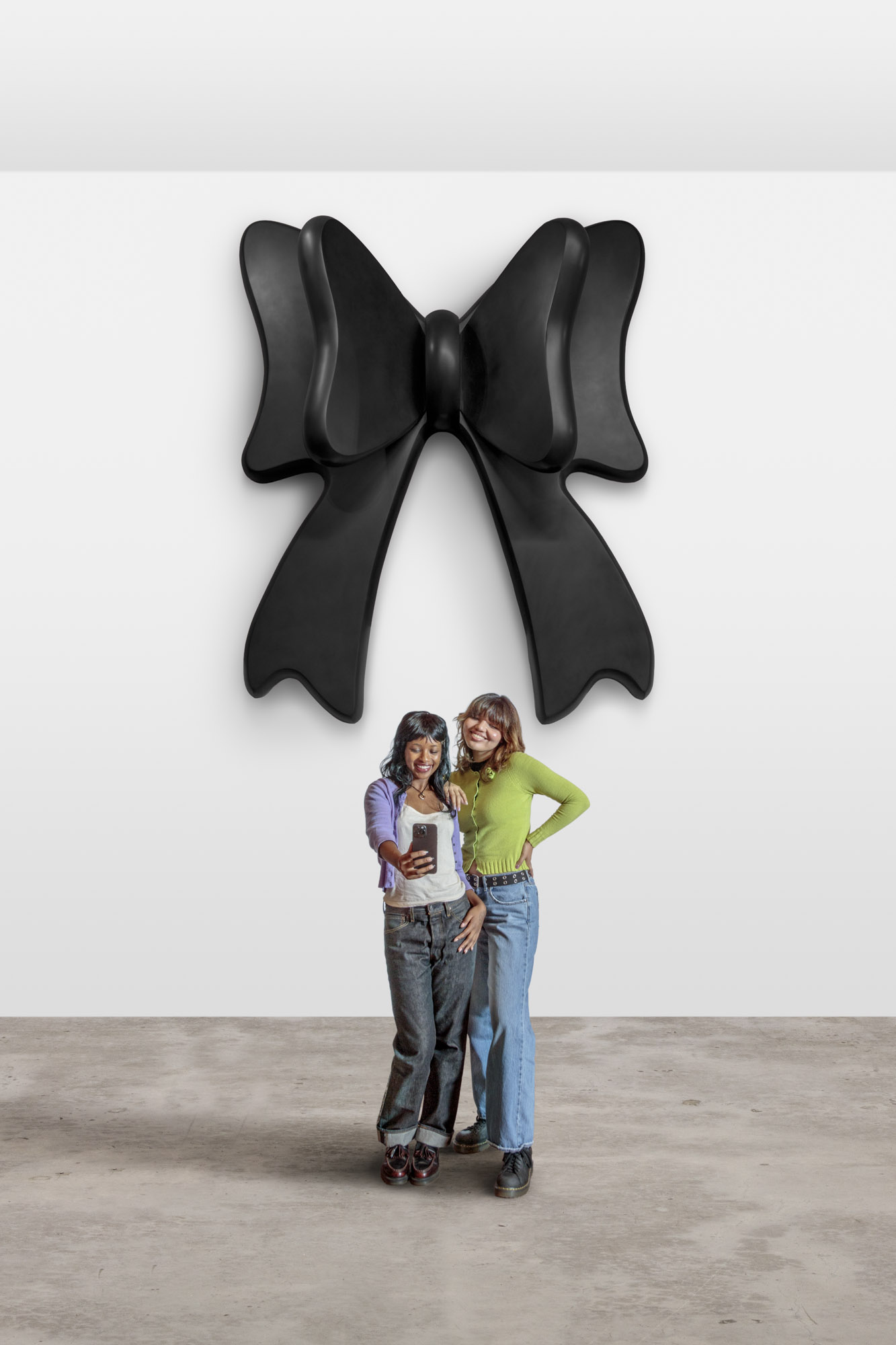
The first room still pivots on scale, and Under The Table (1994) does what it has always done: it turns furniture into architecture and childhood memory into physical disorientation. What matters in this presentation is that the museum does not stop there. The surrounding sequence pushes viewers from spectacle to method.
Across more than 120 works, recurring forms, dishes, chairs, chapels, birds, and snowmen, function as a sustained visual language rather than a branding device. Drawings and smaller studies make process legible: proportion, edge, and serial variation become the real argument. The gigantic works then read less like one-off marvels and more like conclusions inside a longer sentence.
The project operates through scale, memory, and perception without reducing itself to one signature gesture. If you stay with the late and less-photographed works, the show becomes richer and stranger. This is a museum stop that keeps paying out beyond the first iconic image.
2) What remains behind by Helmut Lang at MAK Center
February 19 through May 4

Inside Schindler's concrete and glass geometry, Lang's compressed forms feel both muscular and damaged. Foam, rubber, wax, and found remnants are hardened into silhouettes that preserve prior lives instead of erasing them. You register stress and memory through texture before you assign meaning.
Psychic architecture is the right frame for what happens here. These sculptures hold private and public pressure in the same object, sexuality, repression, and vulnerability without converting those tensions into illustration. Depending on where you stand, they slide between figural and non-figural readings.
Lang's own preference for materials with scars and memories gives the show its backbone. In a month where many installations are optimized for immediate legibility, this one insists on slower perception and rewards viewers who accept ambiguity as part of form.
3) Spirit Level by Tau Lewis at David Zwirner
February 13 through March 29
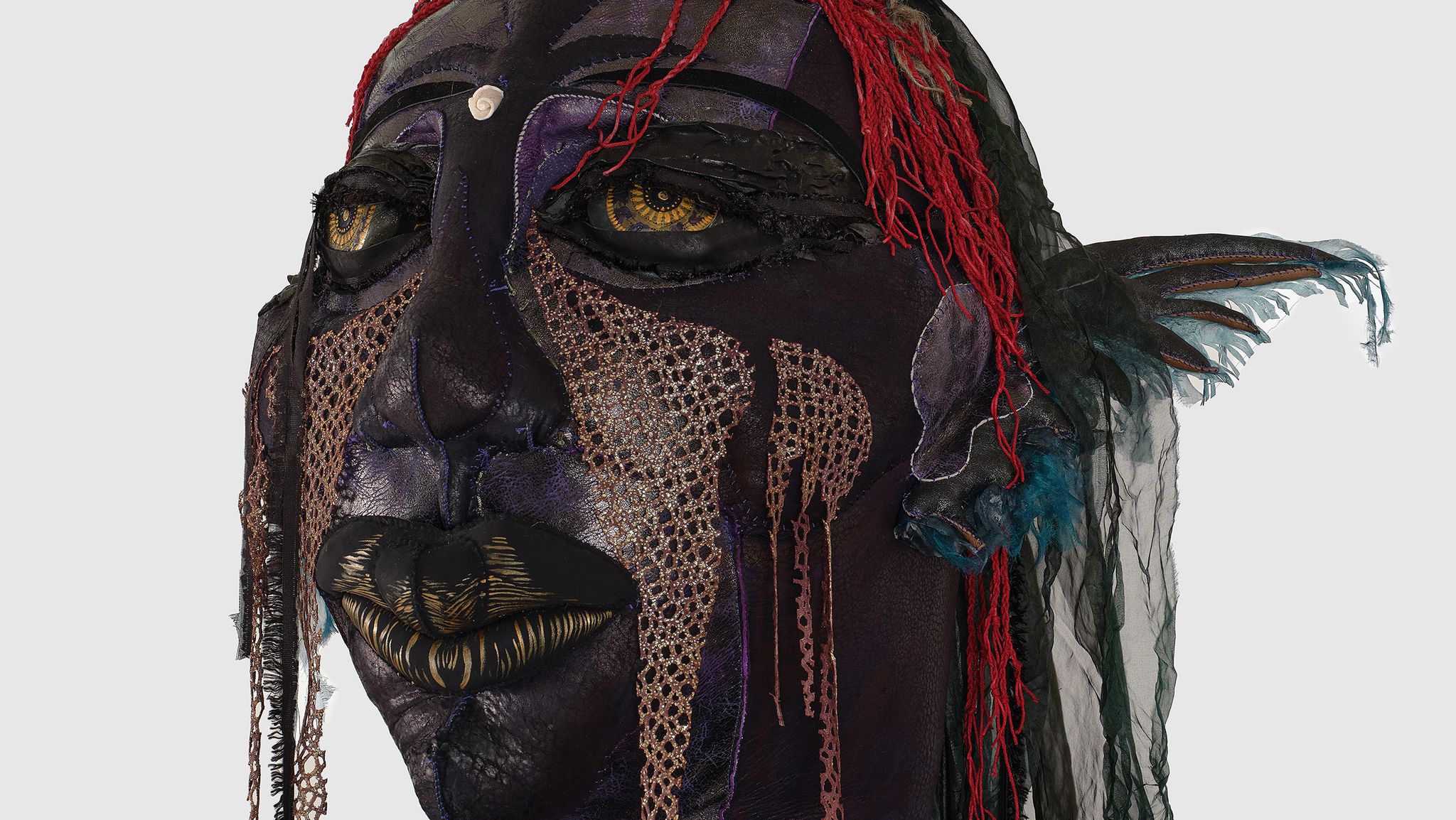
Lewis builds an architecture of figures. The Night Woman (2024), The Handle of the Axe (2024), and The Reaper (2024) are assembled from repurposed leather, shell, bone, and dense stitched textiles, with dimensions that meet the body as environment rather than statue. You feel labor and repair in every seam.
Her own statement, that these figures should resist like a castle, a tree, or a mountain, is visible in how mass and shelter coexist. The Doula (2024), The Miracle (2024), and The Last Transmission (2024) broaden the emotional register without diluting formal control. The installation keeps a clear rhythm even with materially saturated surfaces.
Writers including Jeffrey De Blois and Cecilia Alemani have tracked how Lewis collapses stale art-versus-craft binaries through memory and repair. On the floor, what you encounter is rigor: a sculptural language that is intimate, monumental, and structurally coherent.
4) Riding Horizon by Leiko Ikemura at Lisson Gallery
February 24 through March 28
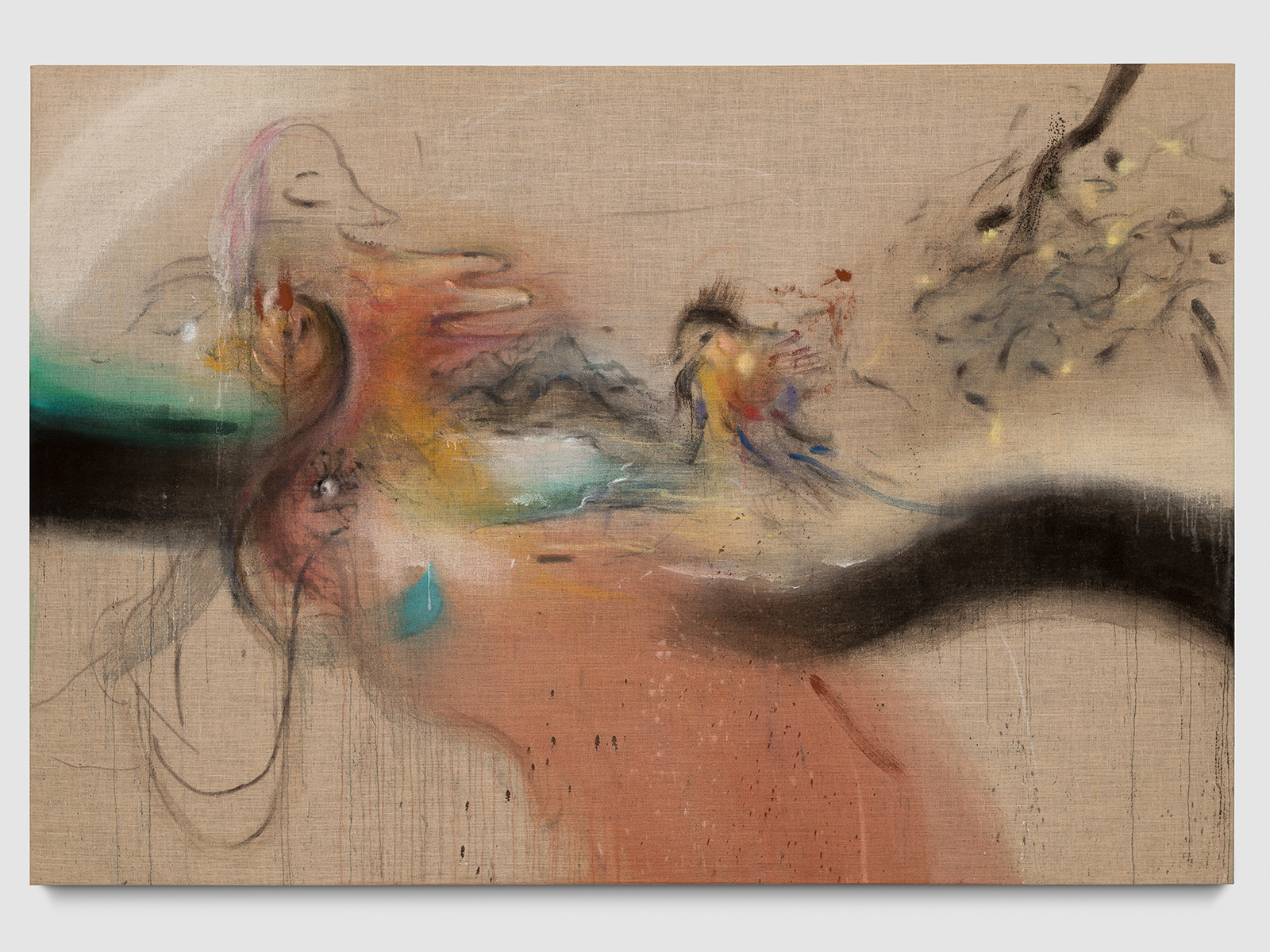
Ikemura's Los Angeles debut is organized as threshold space. A metallic mesh wave, realized with Philipp von Matt, cuts the gallery into shifting visual climates before you encounter paintings and bronzes including Cat Girl Lying (2021) and Double Figure (2021). The room asks you to move, not just look frontally.
Horizon functions here as a meeting point between worlds, and that idea is carried through atmosphere, distance, and tonal drift. Female figures and landscape registers never fully settle, which keeps the work open without becoming vague. The strongest passages hold tension between tenderness and estrangement.
This is an exhibition that rewards duration. It is easy to underestimate on a fast pass and difficult to forget after a slower one.
5) to mars, to explore by Tan Mu at Rusha & Co.
February 14 through March 14

Tan Mu brings together works from the Observable Infinity and Mars series as a sustained meditation on perception across radically different scales. The shift from observable universe to iris to halo gives the exhibition its conceptual engine. Looking is presented as reciprocal experience rather than passive intake.
That idea is carried through in the paintings themselves. Working in oil on linen, Tan Mu builds surfaces that hover between spatial map and concentrated light field, keeping the image in a state of ongoing formation. Rust-toned atmospheric passages and cooler interference bands never settle into stable illustration, so the canvases stay open between cosmic inference, optical event, and contemplative space.
Vision here is mediated, technologically extended, and philosophically conditioned at once. These works treat observation as historically shaped: telescopic distance, scientific imaging, and interior reflection all affect what can be seen. The exhibition does not romanticize that complexity. It stages it directly, showing how systems of knowledge and spiritual orientation can coexist in one pictorial language.
What makes this stop strong in the context of March is its tonal discipline. The show is quiet, but not slight. It asks for slower looking and rewards return visits, especially for viewers interested in how contemporary painting can hold science, metaphysics, and material intelligence in the same frame.
6) Plant Works by Anders Ruhwald at Morán Morán
February 15 through April 5
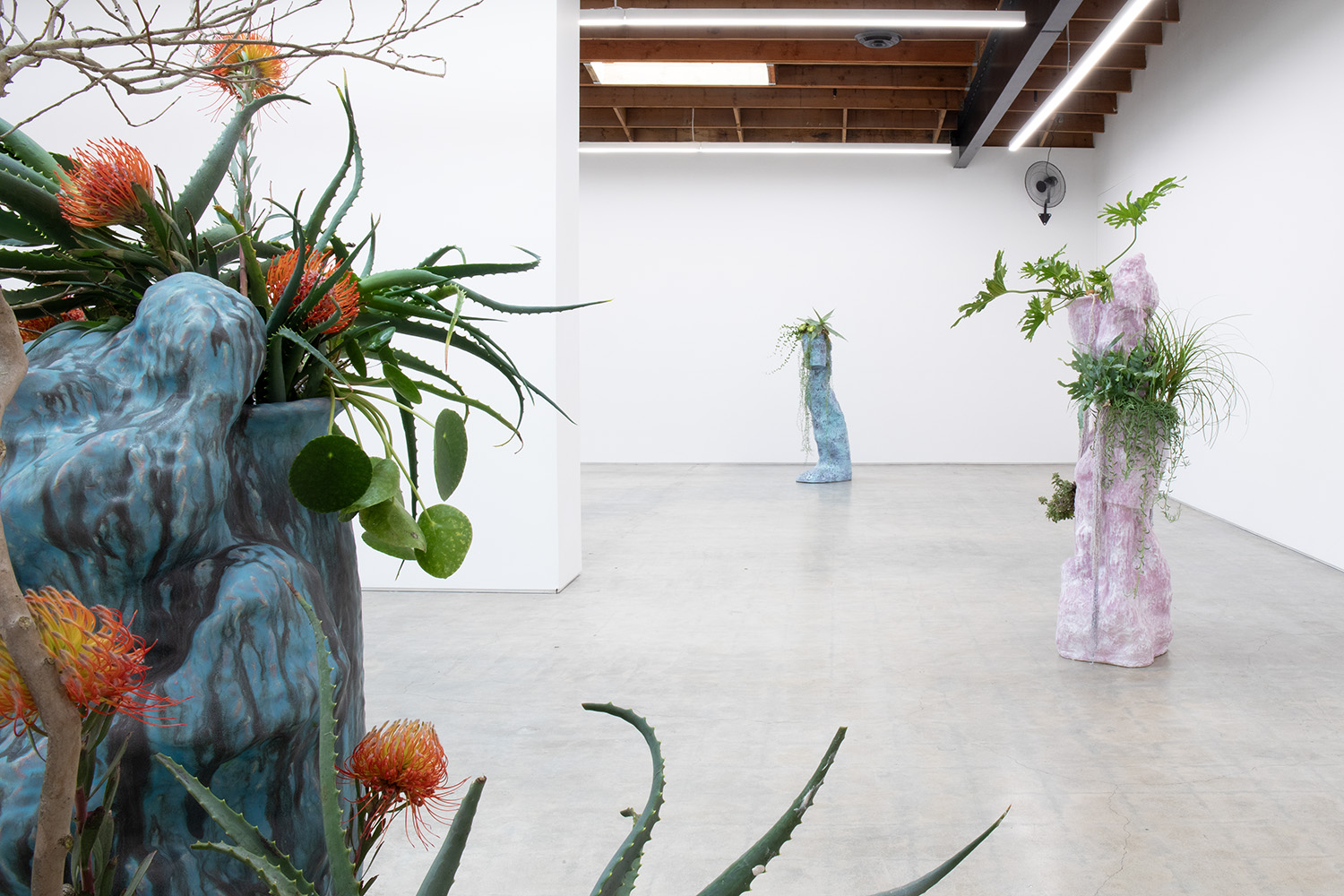
Ruhwald's eight large ceramic sculptures are built as changing systems. Cavities hold living and dried plant arrangements developed with Darren Romanelli and Toyo Florist, making seasonality and care part of the work's composition. Form does not end at fabrication.
The Petitot's Dream subset, named after Ennemond Alexandre Petitot's vase etching suite, translates decorative precedent into unstable ecological structure. Floor fans are integral, not incidental. They circulate the same atmosphere through plants, ceramics, and viewers, so the installation behaves as a shared environment.
This is a clear case of process and reciprocity made visible in real time. The show's precision is in how gently it proves that sculpture can remain conditional without losing formal coherence.
7) Un río abrazando una montaña by Alejandro García Contreras at Anat Ebgi
February 21 through April 4

Contreras organizes this exhibition around a foundational image, the river embracing the mountain, then distributes that paradox through ceramics, mirrors, arrows, and suspended forms. LAS DAMAS Y EL UNICORNIO, UN RÍO ABRAZANDO UNA MONTAÑA, and MAETEL, PASAJERA DE MI MEMORIA establish the show's movement between intimacy, myth, and containment.
The iconographic field is dense, serpents, crystals, bones, flames, chain structures, but the work holds because scale, glaze flow, and contour remain primary. The mirror ringed with ceramic arrows is especially effective, returning the exhibition's symbolic charge back to the viewer's own body and gaze.
Contreras's language of eros, divinity, and taboo never feels generic because it is materially grounded at every step. This entry remains one of the most convincing ceramic installations in the ranking.
8) Jacqueline Humphries at Matthew Marks
February 20 through April 5

Humphries structures this exhibition around perceptual delay. Paintings including JH123 (2024), JH456 (2024), and Crimson Shatter (2024) first register as patterned image fields, then reveal layered edits, interruptions, and drag on close inspection. The show keeps toggling between digital affect and manual revision.
The accompanying print suite, among them Paul Schrader First Reformed #1 (2024) and Paul Schrader Light Sleeper #1 (2024), adds cinematic pacing to the same conversation without overstating the reference. What stays central is surface intelligence and time spent looking.
Compact in scale but dense in optical information, this presentation rewards viewers willing to move slowly and repeatedly between distance and proximity.
9) Tell the Poets by Sarah Cain at Honor Fraser
February 15 through April 19

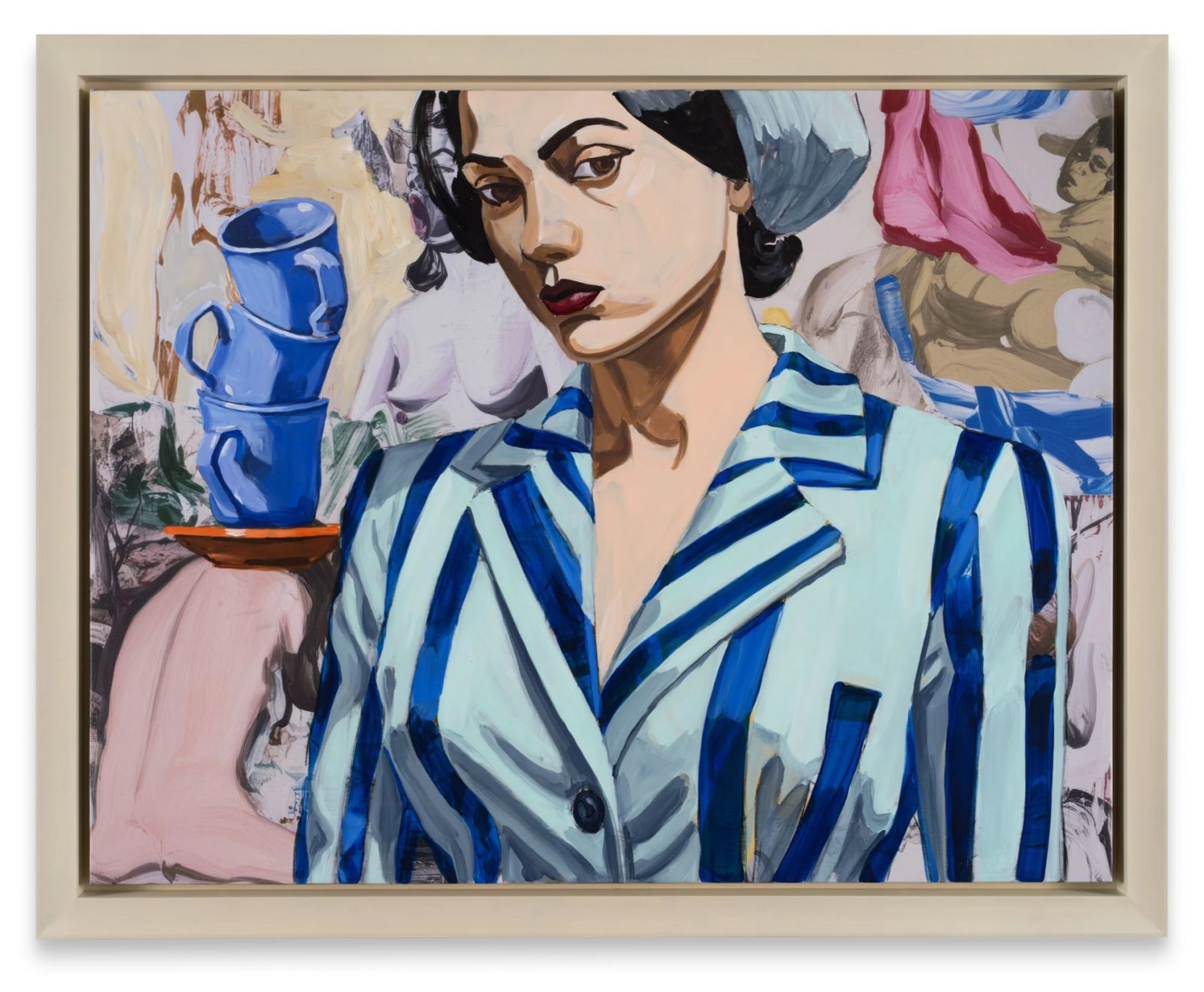
Cain expands painting into a full spatial condition. The exhibition moves from a large site-responsive intervention to canvases and suspended $talismans, painted dollar bills initiated during the 2008 economic crisis as gestures of intention and care. Scale shifts are doing narrative work throughout.
Jamillah James has described Cain's command of physical and pictorial space as disorienting in the best sense, and that reads true here. Gesture, text, and chromatic bursts keep the room in motion while never fully dissolving structure. You are asked to navigate rather than decode.
Jamillah James has described Cain's command of physical and pictorial space as disorienting in the best sense, and that reads true here. What remains after the visit is Cain's ability to keep intimacy and social atmosphere in the same field.
10) David Salle at Sprüth Magers
February 24 through April 18
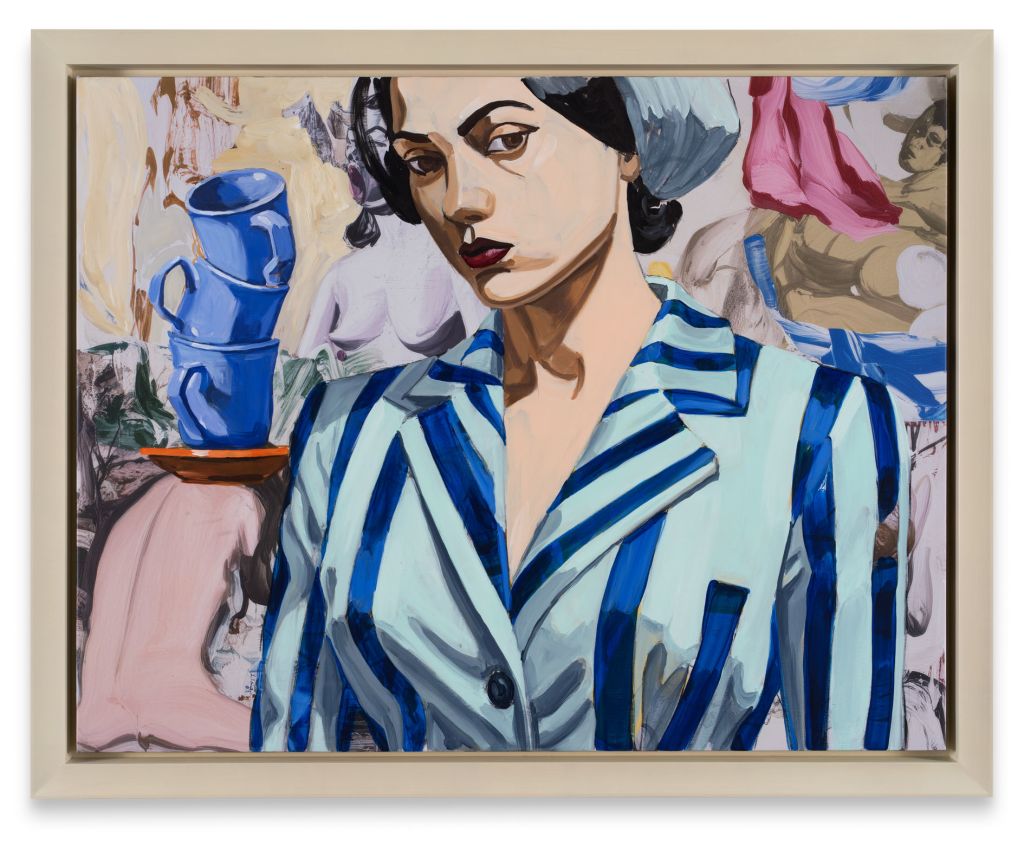
My Frankenstein extends Salle's long interest in juxtaposition through a new technical pipeline: a proprietary model trained on his own prior work. Paintings such as Blue Stack (2025), Birth of Venus (2025), and Olympus (2025) begin from generated compositions and are rebuilt through selection, repainting, and compositional override.
The exhibition's Mary Shelley title is apt because the project stages both invention and risk. Salle treats machine output as a provocation rather than endpoint, and the strongest canvases keep that tension visible instead of resolving it into clean demonstration. The unevenness across works is real, but it reads as experiment rather than failure.
As a closing entry, it sharpens the article's larger point: Los Angeles right now is hosting exhibitions willing to test process in public, not just deliver finished positions.
Taken together, these ten exhibitions describe a city with no single house style and no single speed. Museums, blue-chip galleries, and smaller programs are all producing work that rewards prolonged attention rather than quick consumption. That overlap is what makes this month matter. Los Angeles is not just busy. It is intellectually and materially active in ways that justify sustained looking.