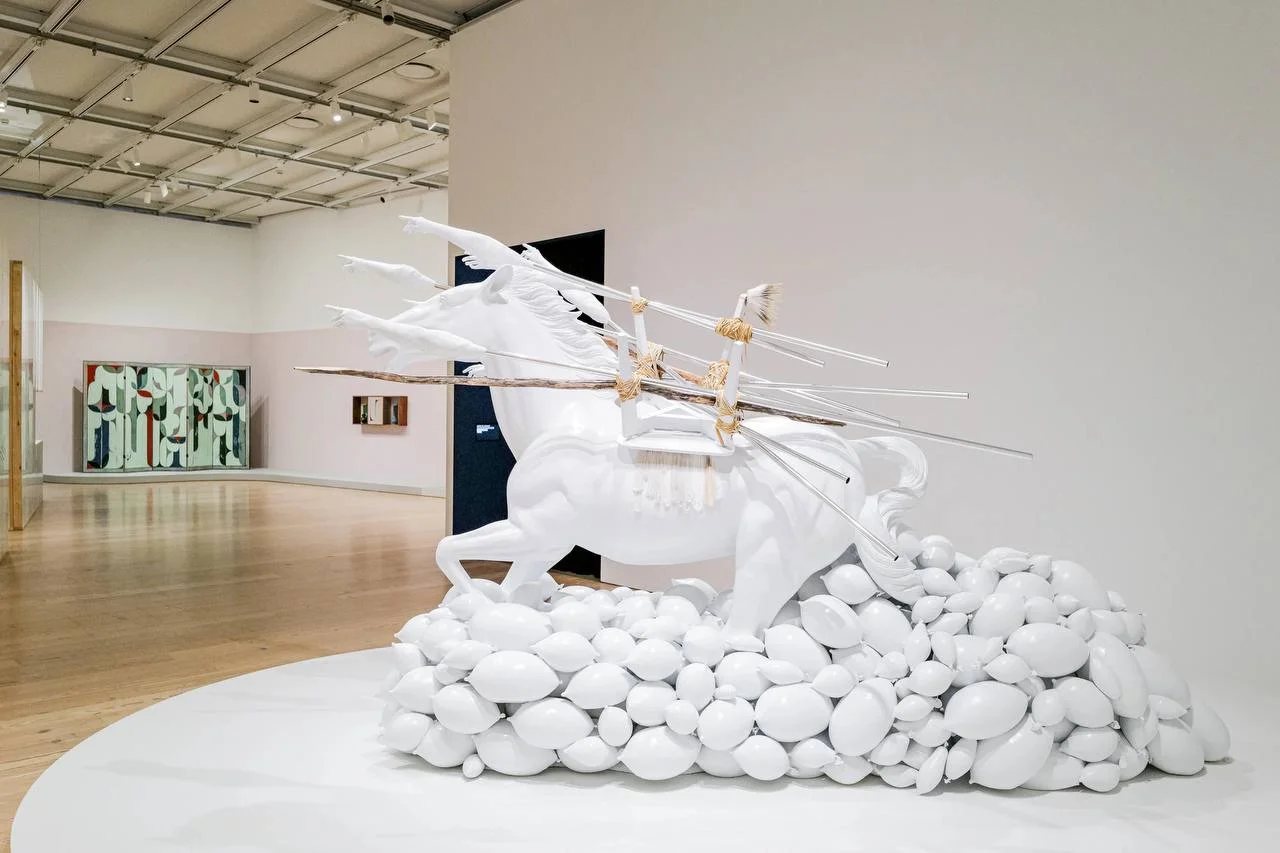
How to See the Whitney Biennial 2026 in One Focused Afternoon
A practical route through key floors, viewing priorities, and pacing tactics for visitors who want a serious first pass through the 2026 Whitney Biennial without defaulting to checklist fatigue.
The 2026 Whitney Biennial is not hard because it is large, it is hard because it is dense. Too many visitors confuse coverage with understanding, then leave with a camera roll and almost no critical memory. If you want a useful first pass in one afternoon, treat the visit like editorial work: decide your thesis, gather evidence, and leave with a coherent read rather than a stack of impressions.
Start before you arrive. Confirm timed entry, floor access, and operating hours on the Whitney Biennial page, then cross-check logistics through the Whitney visit portal. Block at least three hours. Anything under two hours forces reactive movement and guarantees shallow looking.
When you enter, run a 30-minute reconnaissance loop. Do not stop for close reading yet. Note where painting clusters, where installation-heavy rooms require longer dwell time, and where sound bleed distorts concentration. You are building your route map. This first pass should answer one question only: where can sustained attention actually happen in this building today?
For your second pass, limit yourself to four anchors. One: an intergenerational pairing that reframes historical continuity. Two: a materially experimental work that risks failure. Three: a politically explicit piece with clear stakes. Four: a work that resists immediate interpretation. This structure keeps your visit from becoming either market gossip or identity-token accounting.
Allocate time with discipline. Give each anchor 12 to 15 minutes, with no photos in the first five minutes. Write three lines after each stop: what the work does formally, what claim it makes, and what remains unresolved. By the fourth anchor you will have a comparative grid strong enough to test the biennial’s curatorial thesis rather than simply absorb wall text.
Context matters, but sequence matters more. After your second anchor, pause and check the museum’s broader framing at Whitney institutional materials. Then situate artist trajectories against parallel holdings at MoMA, the Guggenheim, and the Metropolitan Museum of Art. This keeps your judgment historical, not just atmospheric.
If you are with collectors, curators, or artists, split for 25 minutes and reconvene with one required prompt: which single work changed your baseline for what a biennial slot should deliver in 2026? Group visits fail when everyone narrates the same room. Forced divergence improves the quality of shared interpretation.
The strongest biennial visits are edited visits: fewer rooms, slower looking, cleaner recall.
Avoid three common errors. First, speed scrolling, which turns every room into an equal-value blur. Second, overreliance on social consensus before forming your own read. Third, substituting market speculation for formal analysis. The biennial can absorb all three habits because it supplies enough stimuli to make them feel productive, but they leave you with little durable knowledge.
For first-time Whitney Biennial visitors, the museum's floor sequence is itself a curatorial argument. The show typically occupies multiple floors, moving from gallery-specific installations on lower levels to painting and photographic work on higher floors. That vertical progression often mirrors thematic density: quieter, more meditative works tend to occupy upper galleries while ground-floor spaces handle louder, more performative pieces. Understanding this layout as a deliberate structure, not random distribution, changes how you read transitions between sections.
The 2026 edition continues a recent tradition of integrating performance and live programming into the exhibition footprint. If your visit coincides with a scheduled performance, factor that into your timing. Performance pieces reshape gallery dynamics even for non-participants, and watching a room transform from static exhibition space to active performance venue offers insights into contemporary practice that object-based viewing alone cannot provide. Check the Whitney's calendar before arrival to identify any live programming that might affect your route.
On documentation: take notes, not just photographs. A phone camera captures visual data but substitutes surface recording for analytical engagement. After each anchor stop, write three lines in your notes app: the work's primary formal move, its implied argument about contemporary practice, and one unresolved question it leaves in your mind. This habit converts passive looking into active interpretation and gives you usable reference material for post-visit conversations or writing.
Use your final 30 minutes for re-looks, not discovery. Return to your top two anchors and watch what changes on second viewing: pacing, scale logic, transitions between objects, and details you missed while orienting. Repeat viewing is where weak first impressions often deepen and strong first impressions either hold or collapse.
After your visit, wait 24 hours before forming a final judgment. Biennial responses mature through distance. The immediate post-visit period is dominated by fatigue and novelty bias; a day later, your memory consolidates which works actually stuck and which were merely loud. That delayed clarity is more diagnostically useful than any opinion formed in the gallery.
Before exit, write a five-sentence memo you could defend a week later: your thesis, one confirming work, one contradictory work, one curatorial strength, one structural weakness. That memo is the point of the afternoon. Without it, you visited; with it, you actually read the biennial.