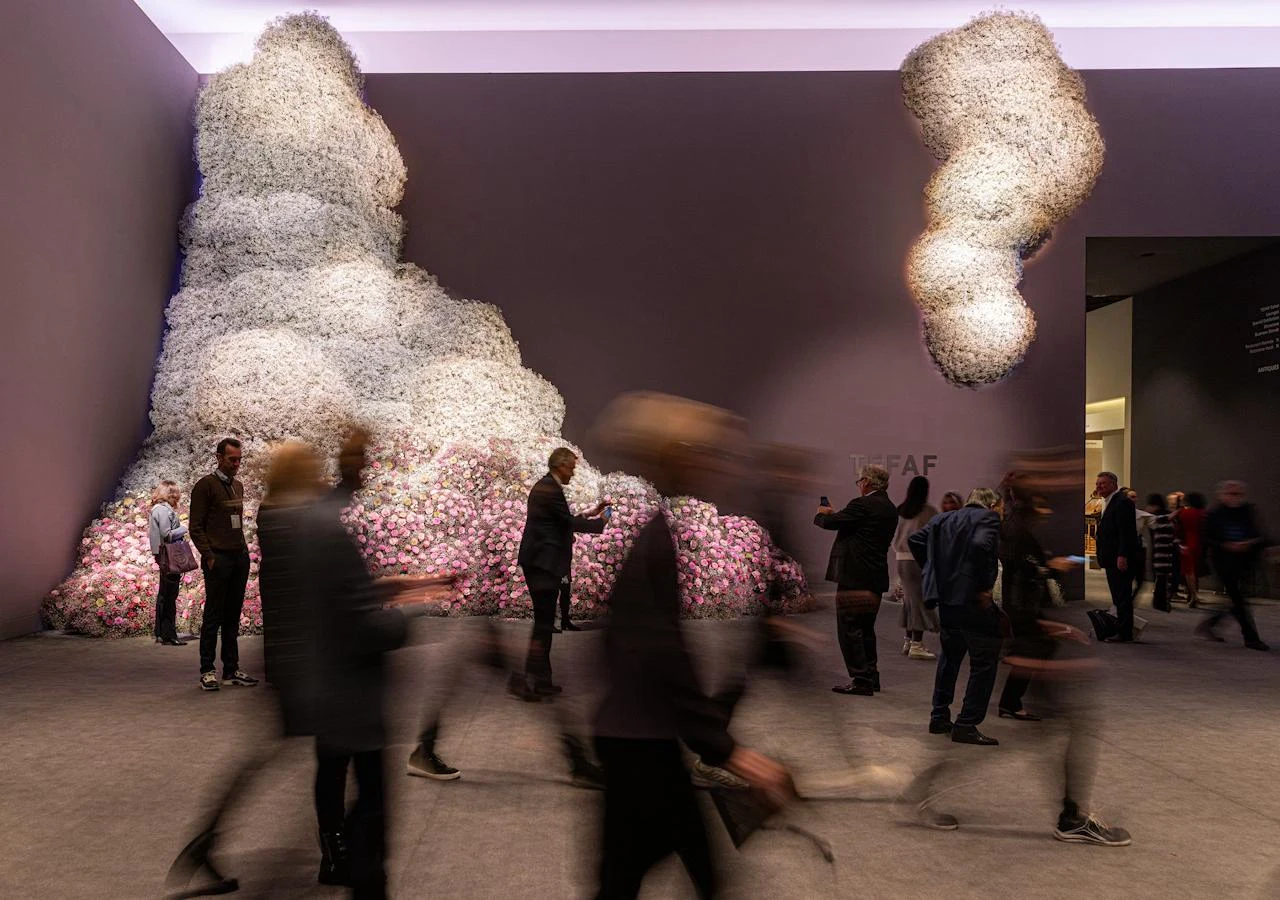
Beyond TEFAF: a strategic museum guide for Maastricht week
TEFAF week is not only a fair-floor sprint. This guide maps high-value museum exhibitions in Maastricht, Amsterdam, The Hague, and Cologne that sharpen context, improve acquisition judgment, and reward close looking.
TEFAF Maastricht concentrates capital, expertise, and high-stakes connoisseurship into a few dense days, but the fair is only half the story. The strongest week plans include exhibitions across nearby institutions where works are framed by scholarship, not sales pressure. That shift in context can materially improve what you buy, what you skip, and what you investigate further.
Use this guide as a decision tool, not a leisure add-on. Each stop below offers a different kind of intelligence: curatorial argument, historical comparison, medium-specific focus, or institutional risk-taking. If your schedule only includes booths and dinners, you are optimizing for access, not insight.
First priority: the Mauritshuis in The Hague, where Birds uses Carel Fabritius’s The Goldfinch as a conceptual anchor rather than a mascot. The exhibition’s range, from old master painting to contemporary intervention, is a useful reminder that icon status can either flatten or deepen looking depending on curatorial discipline. Details: Mauritshuis.
Second: the Rijksmuseum in Amsterdam, where Metamorphoses revisits Ovid not as literary décor but as a durable engine for visual invention. The mix of canonical and modern material creates a productive test for collectors: can you track transformation as a formal problem across centuries, not just as a story you already know? Planning info: Rijksmuseum.
Third: Museum Ludwig in Cologne, where a large Yayoi Kusama exhibition marks the museum’s anniversary with a scale designed for public impact. Kusama is often consumed through social-media reflexes, but this presentation is an opportunity to parse repetition, spatial psychology, and installation engineering at institutional scale. Visit details: Museum Ludwig.
Fourth: the Bonnefanten in Maastricht, where thematic pairings invite slow comparative looking. This format is useful during fair week because it retrains attention after rapid booth-scanning. Instead of asking whether a work is immediately legible, the exhibition asks whether relationships between works can sustain thought over time. Program page: Bonnefanten.
How to sequence the week: place one museum visit before your first full fair day and one after your heaviest buying day. The pre-fair visit calibrates visual judgment; the post-fair visit tests whether your impressions hold once works are removed from transactional framing. This simple rhythm reduces recency bias and social proof effects.
Collectors should also treat museum bookstores and catalog desks as intelligence points. Exhibition publications, wall-text bibliographies, and curatorial essays often surface references that never appear in sales dossiers. Build a short reading stack each day and share it with your advisor team before finalizing major decisions.
For advisors, this is where value is created. A client who sees only fair inventory can be guided on price and access. A client who also sees museum arguments can be guided on historical fit, long-term coherence, and institutional trajectory. That second advisory layer is harder to replicate and more defensible over time.
For artists and younger galleries visiting TEFAF, these exhibitions are equally strategic. They reveal how institutions handle pacing, density, didactics, and spatial transitions for difficult material. Those lessons can inform booth design and communication choices as directly as any market trend report.
Logistics matter. Trains between Maastricht, Amsterdam, The Hague, and Cologne are viable with planning, but do not overpack your calendar. Two high-quality museum stops executed with attention will outperform four rushed check-ins done for social proof. Leave margin for return visits if one show demands a second look.
The larger point is simple: market weeks reward speed, while serious judgment requires friction. Museums provide that friction. Use them deliberately, and TEFAF becomes less about surviving a schedule and more about building a sharper, more defensible set of convictions.
If you are building a collection strategy, document these visits the same way you document fair meetings. Note what curatorial framing changed your view, which comparative hangs clarified attribution questions, and where conservation display choices affected your confidence in medium durability. That record becomes a decision archive you can audit later.
Finally, treat this museum circuit as a calibration exercise before the next major fair cycle. The teams that consistently outperform in volatile markets are usually the ones that combine transactional speed with disciplined looking habits. Around TEFAF, nearby institutions make that discipline available within a single week.
One useful practice is to separate what you learned at each stop into three buckets: visual evidence, curatorial argument, and market implication. Visual evidence concerns what you actually saw in scale, surface, and installation; curatorial argument concerns the institutional thesis; market implication concerns how those two factors alter valuation confidence. Writing this down prevents the familiar fair-week collapse where every impression blends into one generalized sense of quality.
A second practice is to run a nightly debrief with your team using only works encountered outside sales contexts. Ask which artists gained relevance when detached from booth choreography, and which lost urgency without transactional framing. The answers are often uncomfortable, but they are exactly what improve long-term collecting discipline and reduce expensive, socially driven mistakes.