How to Read Gallery Insolvency and Storage-Risk Headlines in 2026
When a gallery collapses, the real story is who controls possession, paperwork, storage terms, and the artist's ability to recover work fast.
Start with possession, not ownership
When a gallery insolvency story breaks, coverage usually begins with the easiest moral frame: the gallery owes money, artists are at risk, and chaos follows. That framing is true as far as it goes, but it misses the operational question that can decide everything in the first days after a collapse. Who physically has the work? As The Art Newspaper argued in its sharp piece on storage-provider liens, artists may retain title to consigned works and still find themselves unable to retrieve them if a third-party storage company has not been paid. In practical terms, possession can outrun ownership for long enough to do real damage. That is the first thing a serious reader should look for whenever a gallery closes or enters administration.
Possession matters because insolvency scrambles the normal hierarchy of trust. Artists often assume that if the work is legally theirs, recovery should be straightforward. But galleries routinely outsource storage, shipping, and handling. Once a provider is involved, the artist may be dealing not with a trusted dealer but with a company whose leverage comes from holding the object and citing terms the artist never saw. In that setting, the headline question is not who deserves the work. It is who can force movement.
Learn the difference between consignment comfort and contractual reality
The art trade still runs on a culture of selective informality. Consignment relationships are often described in warm language about representation, trust, shared ambition, and long-term partnership. Under stress, that language becomes almost useless. What matters is the paperwork trail: consignment agreements, inventory lists, release notices, shipping records, storage contracts, and any clause that lets a gallery bind an artist to third-party terms. The Sharples article highlights a particularly brutal version of this problem in English law, where a storage provider may claim a lien over works because the gallery agreed to it as the artist's agent. Many artists discover the existence of that structure only when the gallery has already failed.
So when you read that a gallery has entered administration, do not stop at the debt total or the dramatic anecdotes. Ask four document questions. Were consignments written clearly? Were storage arrangements disclosed? Did artists receive notice of third-party providers? Did anyone maintain a current inventory that matches physical location to ownership status? A gallery that cannot answer those questions cleanly may have been functioning on confidence rather than on systems. Confidence disappears faster than paperwork in an insolvency.
This is why readers should distrust stories that frame collapses purely as management misfortune or market bad luck. The market may indeed be hard. But insolvency becomes catastrophic for artists when operational opacity has been normalized for years before the crash. A gallery can be beloved, critically admired, and socially central while still running weak controls over storage, payment timing, and legal authority. Cultural prestige is not a substitute for back-office discipline. The recent failures at Tiwani Contemporary and earlier crises around galleries such as Simon Lee made that painfully visible across the trade. In 2026, it is often the thing that hides the absence of it.
Follow the storage chain all the way out
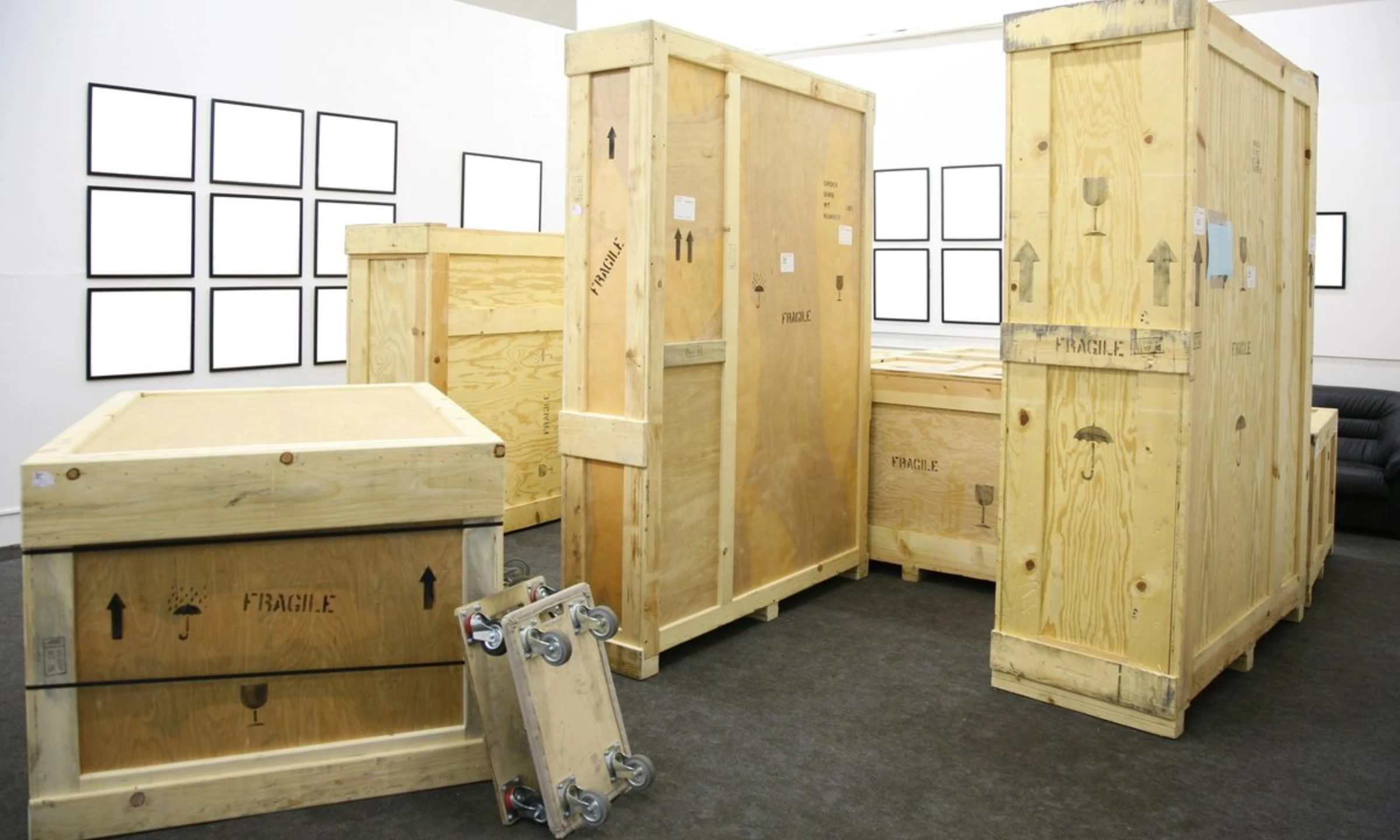
Third-party storage sounds like a detail because most readers imagine artworks either hanging in a booth or resting safely in a gallery back room. In reality, the supply chain is longer and more fragmented. A work might move from artist studio to gallery premises, then to off-site storage, then to a fair shipper, then to a temporary holding location, then back into storage under a different account code, often while also being listed in systems tied to art fair deadlines or lender requests. Every handoff creates another point where title, authority, and logistics can drift apart. The more ambitious the gallery's fair schedule and international footprint, the more opportunities there are for that drift to become dangerous.
That is why the phrase "held in storage" should set off alarms. Storage is not neutral. It is a contractual environment with fees, insurance conditions, release protocols, and sometimes blanket security interests. If a gallery has not paid the provider, the provider is incentivized to use the one asset it indisputably controls: access. From the artist's perspective, the legal debate may be about apparent authority and wrongful interference. From the operator's perspective, the immediate reality is simpler and harsher. The work does not move until someone is satisfied, pressured, or paid.
Readers who followed our guide to reading museum funding crises will notice a familiar pattern. Institutional stress becomes most visible at the point where a system stops being able to absorb ordinary obligations. In museums that might be payroll, programming, or maintenance. In galleries it is often consignment proceeds, storage bills, and shipping invoices. These are not secondary details. They are the pipes that reveal the pressure.
Pay attention to who the law treats as principal and agent
One of the nastiest aspects of the current debate is that artists can be bound by decisions they did not know were being made. If a gallery is treated as the artist's agent, then its agreements with storage firms may carry legal force even when the artist never saw the terms. That is the part of Sharples's argument that should unsettle everyone in the trade. The traditional gallery model depends on delegated authority. Artists let galleries place works, negotiate sales, manage shipping, and handle logistics because constant direct supervision would be impossible. But delegated authority becomes a trap when insolvency exposes how much was delegated without active oversight.
This is where readers should resist comforting abstractions like "the artist still owns the work." Ownership is vital. It is just not self-executing. Legal title often has to fight through agency doctrine, contract language, and the economic reality that litigation is expensive. A storage provider does not need to win a philosophical argument about justice. It only needs enough practical leverage to make recovery costly. In a thin market, or for a mid-career artist without deep reserves, that may be plenty.
The same logic should change how artists evaluate gallery relationships before anything goes wrong. Ask whether the gallery uses third-party storage. Ask whether those providers claim liens. Ask who receives notices when invoices go unpaid. Ask whether works can be released directly to the artist on demand. These questions can feel awkward because the trade still rewards social ease over procedural bluntness. Ask them anyway, and compare the answers with baseline guidance from organisations such as the Artists Information Company or the Working Artists and the Greater Economy movement. A gallery that treats such questions as a breach of trust is really telling you that trust is expected to replace disclosure.
Read insolvency headlines as governance stories, not just tragedies
It is tempting to read every gallery failure as a singular drama caused by bad timing, collector hesitation, fair fatigue, or a soft market. Those factors matter, but they rarely explain the whole collapse. Better questions sit one layer below the headline. Was the gallery overexpanded? Did it rely on art fairs for cash flow? Were artists effectively financing operations by waiting too long for payment? Did inventory discipline deteriorate as prestige grew? Were creditors, landlords, and storage providers carrying the business longer than anyone admitted publicly? Insolvency is often the visible end of a governance problem that had been distributed quietly across many counterparties.
That governance lens also prevents a sentimental mistake. Not every gallery that closes was dishonest, and not every gallery that survives is healthy. What distinguishes a manageable closure from a destructive one is usually the quality of records, the honesty of communication, and the speed with which artists can verify location and recover work. In other words, the real sign of seriousness is not vibe. It is operational traceability.
There is a market lesson here too. The last decade encouraged galleries to act bigger than their balance sheets: more fairs, more cities, more shipping, more staff, more polished branding. That model made many businesses look stronger than they were because expansion itself functioned as proof of relevance. When liquidity tightens, the hidden liabilities of that image-first growth model surface fast. Storage disputes are one of the places they surface most cruelly because the consequences land directly on artists whose work becomes collateral without ever formally being called that.
What a serious reader should do next
If you are an artist, collector, advisor, or curator reading an insolvency headline in 2026, train yourself to extract a checklist instead of a mood. Identify where the work is. Confirm who has inventory records. Find out whether an administrator has been appointed. Determine whether third-party storage is involved. Ask whether any lien or retention claim exists. Verify insurance status. Request written acknowledgment of title and location. Those steps sound procedural because they are. Procedure is what remains when reassurance evaporates.
Collectors and institutions should read these stories with equal care. If you are buying from a distressed gallery, ask whether the work is actually on site, whether any storage charges are outstanding, and whether the administrator has confirmed release authority in writing. If you are lending to or consigning through a gallery, ask to see the storage and insurance pathway the way you would ask to see provenance. The point is not to turn every transaction into paranoia. It is to stop treating logistics as beneath the level of taste. In the contemporary trade, logistics are part of provenance.
And if you are simply trying to understand what a collapse means for the field, look beyond the schadenfreude and the soft-focus obituary language. Gallery insolvency stories reveal how much of the art world still depends on fragile blends of trust, undercapitalization, and outsourced risk. The point is not to become paranoid. It is to become literate. The next time a gallery failure hits the news, do not ask only whether the market is weak. Ask who holds the keys, who holds the files, and who has to pay before the art moves. That is where the real story starts.