Guide: Curating Global South Perspectives
A strategic guide for curators on decentering Western canons, managing ethical partnerships, and amplifying marginalized voices in contemporary art.
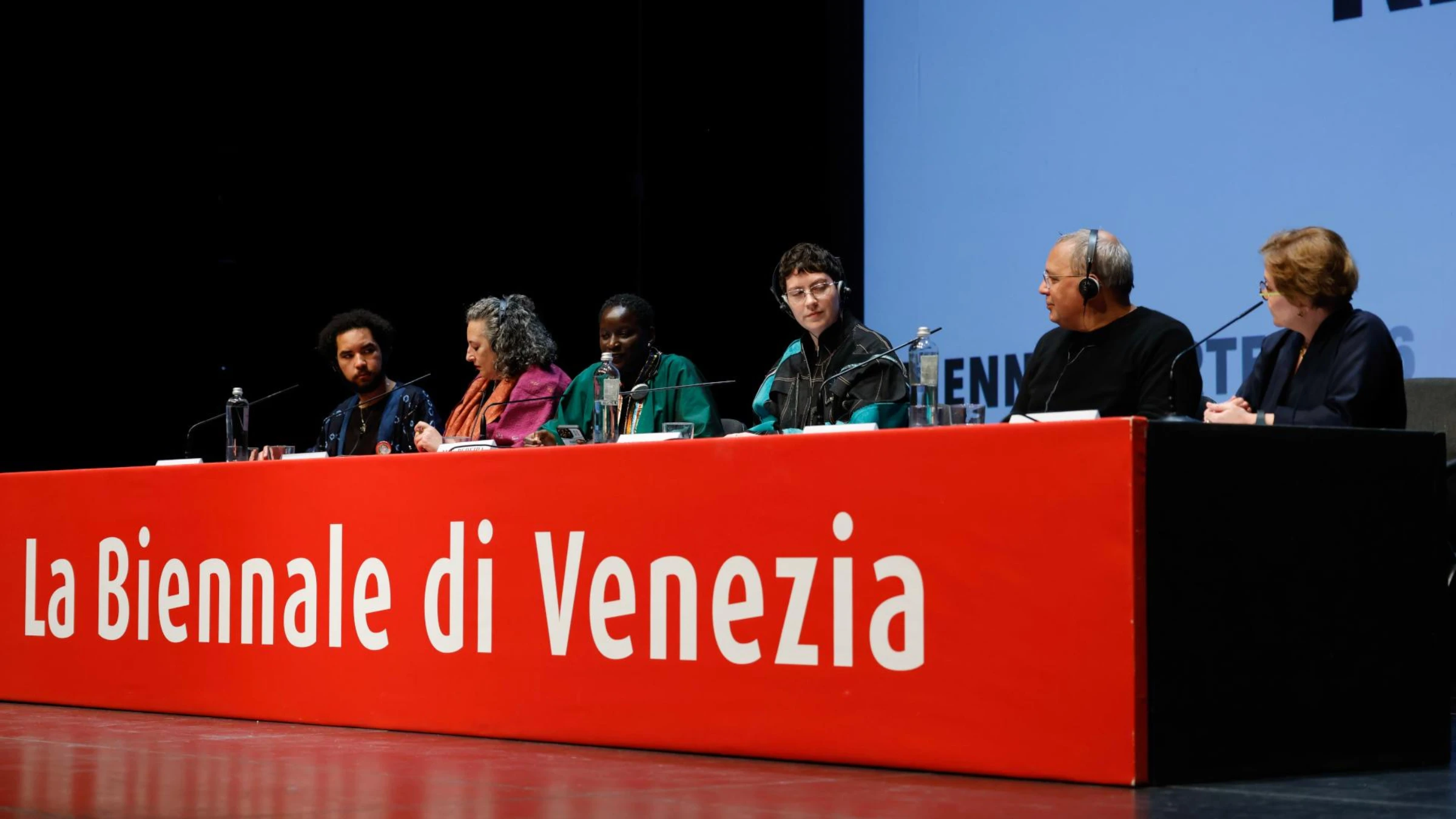
The contemporary art world is undergoing a tectonic shift. As the 61st Venice Biennale's In Minor Keys has demonstrated, the era of the Western curator as the sole arbiter of taste and history is ending. Decentering the West is no longer a peripheral 'diversity' goal; it is an operational necessity for any institution that wishes to remain relevant in a multipolar world. For the modern curator, this requires a fundamental dismantling of how we scout, select, and present art from the Global South.
The challenge lies in avoiding 'tokenism'—the practice of including a handful of artists from non-Western regions to satisfy a quota—and instead moving toward a structural reimagining of the exhibition. True decentering requires an admission that the Western museum is itself a Western invention, and that its parameters (the white cube, the linear timeline, the individual genius) may be incompatible with the artistic practices of other cultures.
Strategic Scouting Beyond the Western Hub
The first step in amplifying marginalized voices is to break the cycle of 'discovery' that relies on New York, London, and Paris. Too many curators 'discover' Global South artists only after they have been validated by a Western gallery. To counteract this, curators must establish direct relationships with regional hubs, local collectives, and independent archives.
Effective scouting requires a commitment to deep research over rapid acquisition. Instead of relying on digital portfolios or Instagram, curators should engage with local historians and theorists who can provide the necessary cultural context. The goal is to find work that is not merely 'exotic' to a Western eye, but work that possesses a rigorous internal logic and speaks to the specificities of its own place. This means prioritizing the artist's intent and the work's original cultural function over its ability to fit into a pre-existing Western aesthetic.
This shift in scouting methodology also requires a willingness to engage with 'non-art' spaces. Many of the most significant works from the Global South are not housed in galleries but in community centers, religious sites, or digital archives. Curators who are willing to step outside the traditional gallery circuit find that the pool of talent is far larger and more diverse than the one presented by the commercial market. The objective is to move from a model of 'discovery' to a model of 'partnership' with the local custodians of culture.
Moreover, a truly decentered scouting process must actively resist the 'market-driven' logic of the contemporary art world. When curators rely on the top 1% of galleries to provide talent, they are not discovering art; they are discovering a market segment. The goal should be to identify artists whose work is fundamentally challenging to the status quo, rather than those who have already been smoothed over for corporate collection. This involves investing in time and travel—physically visiting the regions and spending time with the artists in their own environments—to ensure that the work is understood in its proper context.
Managing the Ethics of Institutional Partnership
As museums expand globally, the ethics of their partnerships are under unprecedented scrutiny. The recent protests against the Centre Pompidou's partnership with Hanwha Group serve as a cautionary tale. When a museum partners with a conglomerate whose profits are derived from the arms industry or environmental destruction, the art on the walls becomes an 'art-washing' operation.
Curators must insist on a rigorous ethical audit of any corporate partner before a project begins. This audit should include a transparency report on the partner's supply chain, political lobbying, and human rights record. More importantly, the curator must have the agency to walk away from a partnership if the entity's values conflict with the art's message. The integrity of the exhibition is not just in the work itself, but in the infrastructure that supports it. A project that claims to champion liberation while being funded by an oppressor is a contradiction that the public—and the artists—will no longer tolerate.
This ethical framework must extend to the long-term management of the partnership. Corporate sponsorship should not come with editorial control. If a partner requests the removal of a challenging artwork or the softening of a critical narrative, it should be viewed as a red flag for the institution's intellectual autonomy. The curator's role is to protect the work from the interests of the funder, ensuring that the museum remains a site of critical inquiry rather than a corporate showroom.
Furthermore, the relationship between the funder and the artist should be transparent. Curators should ensure that the artists' contracts are fair and that the funding source does not exert undue influence over the artists' future work. This transparency is the only way to prevent the museum from becoming a tool for corporate rehabilitation. By making the funding sources public and clearly linked to the projects they support, the curator can maintain a level of critical distance between the capital and the culture.
Designing for a Non-Hierarchical Experience
The physical layout of an exhibition is a political statement. The traditional 'journey' of a museum often follows a linear progression that mirrors the Western concept of history. To decenter the canon, curators should experiment with non-linear, rhizomatic designs that allow for multiple entry points and overlapping narratives.
Utilizing the concept of "Tout-Monde" (Whole World), as seen in the 2026 Venice Biennale, allows for a world where the Global South and the West speak in conversation rather than in hierarchy. This might involve:
- Mixing historical and contemporary works from different regions to show shared influences.
- Allowing artists to design their own display environments, rejecting the uniformity of the white cube.
- Integrating soundscapes and performative elements that prioritize the lived experience over the static object.
The use of space and light can also be leveraged to disrupt the hierarchy of the 'masterpiece'. Instead of a single, centrally lit artwork surrounded by a void, curators can create immersive environments where multiple works occupy the same space with equal weight. This challenges the notion of the individual genius and instead emphasizes the collective and communal nature of artistic production in many Global South cultures. By disrupting the spatial logic of the museum, the curator can physically embody the ideological shift toward a multipolarity.
The Role of the Curator as Mediator, Not Master
Finally, the curator must transition from the role of 'tastemaker' to 'mediator'. The goal is no longer to impose a vision on the art, but to create the conditions for the art to speak for itself. This means practicing an 'estrangement' from one's own cultural biases and acknowledging the limitations of one's own perspective.
The most successful exhibitions of the future will be those that embrace the 'minor keys'—the dissonances, the gaps, and the contradictions that arise when diverse cultures intersect. By prioritizing the ethical integrity of the partnership, the depth of the research, and the non-linear nature of the presentation, the curator can help move the art world toward a more honest and inclusive future. The question is no longer whether we should include the Global South, but how we can rebuild the system to actually accommodate it.
Ultimately, the curator's success in the new era is measured not by the prestige of the artists they include, but by the extent to which they have created a space for genuine critical engagement. This requires a humility that has been absent from the history of the Western curator. By stepping back and allowing the marginalized voices to lead the narrative, the curator can help transform the museum from a temple of Western authority into a living archive of human experience.
This transition requires a lifelong commitment to learning and unlearning. The curator must become a student of the cultures they are presenting, moving beyond a superficial understanding of 'diversity' toward a rigorous intellectual engagement with the specificities of local knowledge. The goal is to create an exhibition that is not a monologue by the curator, but a polyphony of voices, where the curator's primary role is la ensure that each voice is heard clearly and with its own authority.