Beyond the Brand: A Guide to Understanding Frida Kahlo
As Tate Modern presents 'The Making of an Icon,' we explore the tension between the commercialized 'Fridamania' and the radical, complex reality of the artist
The Paradox of Fridamania
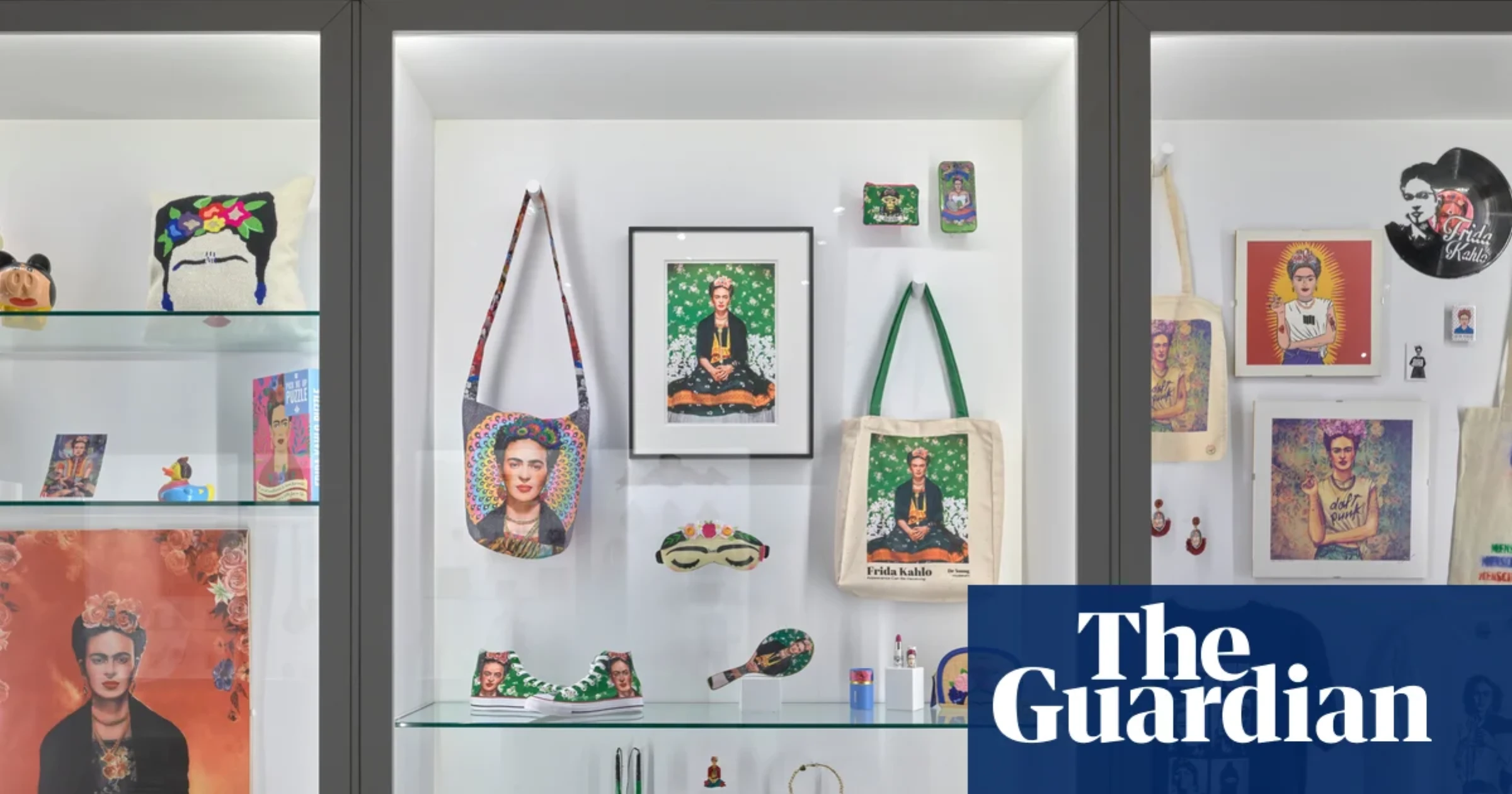
To walk into a museum gift shop today is to encounter a secular saint. Frida Kahlo's likeness is everywhere: on socks, mugs, notebooks, and phone cases. Her image has been reduced to a recognizable shorthand—the monobrow, the floral headdress, the stoic gaze. This global phenomenon, often termed "Fridamania," has transformed a radical, suffering, and politically charged artist into a consumer product. But as the new exhibition at Tate Modern, Frida: The Making of an Icon, seeks to demonstrate, the real Frida is far more complicated, dangerous, and rewarding than the one sold in the gift shop. Understanding Kahlo requires us to peel back the layers of commercialization and engage with the visceral reality of her work. For a deeper dive into this tension, see this critique of the Tate exhibition.
The commercialization of Kahlo is a double-edged sword. On one hand, it democratizes her image, allowing marginalized communities—Chicana/o artists, queer culture, and disability advocates—to claim her as their own. On the other, it sanitizes her biography. The "inspiring tale of resilience" often found in children's books erases the rude, heavy-drinking, and committed communist who challenged every social norm of her time. To truly see Frida, one must look past the brand and into the blood.
The Art of Pain and Presence
Kahlo's work is an exercise in brutal honesty. Her paintings are not merely self-portraits; they are maps of physical and psychological trauma. In The Accident (1926), she summons the memory of the bus crash that shattered her spine and pelvis, placing her bandaged form in a landscape of collision. In Henry Ford Hospital (1932), she depicts the raw agony of miscarriage, surrounded by clinical machinery and personal emblems of grief. These works do not ask for pity; they demand a witness. The power of her art lies in its refusal to look away from the parts of the female experience that are typically hidden: blood, abortion, and the crushing weight of chronic illness.
This commitment to the visceral is what connects her to contemporary artists like Tracey Emin. Both artists utilize the body as a primary site of investigation, transforming private pain into public spectacle. When we view Kahlo's work, we are not just looking at a woman from 1930s Mexico; we are looking at the blueprint for the modern era's obsession with self-revelation. However, while today's social media culture often performs vulnerability for likes, Kahlo's vulnerability was a strategic tool for survival and identity construction.
Constructing the Persona
It is a mistake to think of Frida's art and her persona as separate entities. In her lifetime, Kahlo carefully constructed herself as a character. By wearing traditional Tehuana dress and braiding her hair with Aztec beads, she was not just honoring her heritage; she was performing a political identity. She became a queen in her own right, creating a visual brand long before the term existed. This performance was an act of resistance against the European-centric standards of beauty and class that dominated the Mexican art world of the early 20th century.
Her relationship with photography further fueled this construction. From her father's influence as a photographer to her long-term lover Nickolas Muray's color portraits, Kahlo knew exactly how to pose for the lens. The photographs we see today—straightforwardly beautiful and iconic—often overshadow the complexity of her paintings. The "icon" is a photograph; the "artist" is the painting. To understand Frida, one must recognize that she was a master of the gaze, controlling how the world saw her while simultaneously exposing her deepest wounds on canvas.
Politics, Communism, and the Radical Edge
Beyond the flowers and the eyebrows lies a fierce political commitment. Frida Kahlo was a dedicated communist, a fact that is often scrubbed from her commercial image to make her more palatable to global consumers. Her politics were not a hobby; they were central to her identity and her art. She viewed her personal struggles through the lens of a broader class struggle, seeing the pain of the individual as inseparable from the pain of the oppressed. This radical edge is what gave her work its teeth, preventing it from becoming merely decorative.
The tension between her communist ideals and her status as a celebrity is a recurring theme in her life. She was an artist who criticized capitalism while being championed by the very elite who bought her work. Yet, this contradiction is precisely what makes her human. She was not a saint, but a woman of contradictions—capable of great love and great cruelty, of profound faith in the revolution and deep self-doubt about her own talent. This complexity is what the Tate exhibition attempts to recapture by showing her alongside the generations of artists she inspired.
How to Engage with Kahlo Today
To move beyond the brand, the viewer should approach Kahlo's work with a focus on the specific rather than the symbolic. Instead of seeing her as a "symbol of resilience," look at the specific brushstrokes in A Few Small Nips (1935), where a man stands coolly over a mutilated woman. Ask why she chose to paint her own blood. Notice the influence of the 1930s feminist movements and the way her work intersected with the Mexican Renaissance painter María Izquierdo. By focusing on the art-historical context, we rescue Frida from the gift shop.
Finally, recognize that the "real" Frida is not a destination to be reached, but a conversation to be had. Between the commercial icon and the radical artist lies a space of productive tension. We can appreciate the democratic ownership of her image while still demanding the intellectual rigor required to understand her art. Frida Kahlo reminds us that the most honest way to exist in the world is to embrace the complicated, difficult, and often contradictory parts of our own history. The icon is a mask; the art is the face.