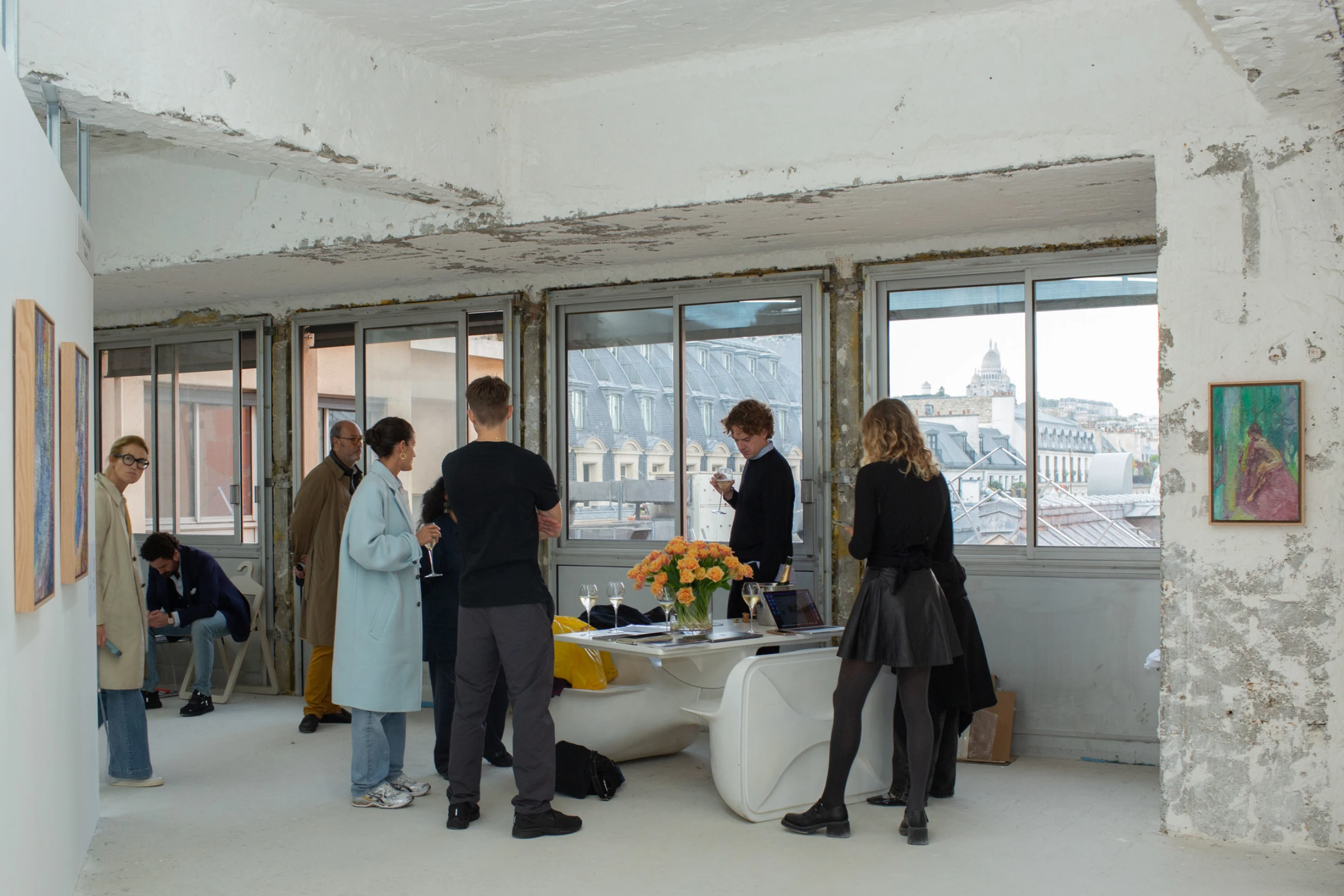
Collector Playbook: How to Buy Intelligently During Milan Art Week
A practical framework for collectors and advisors navigating Milan Art Week, from pre-fair underwriting to post-purchase due diligence and institutional strategy.
Milan Art Week rewards preparation and punishes impulse. The city now concentrates museum programming, private foundations, gallery exhibitions, and fair activity into a short, noisy window that can make even experienced collectors operate reactively. If your objective is long-term collection quality rather than event participation, you need a system that converts fair-week velocity into disciplined decision-making. This playbook is built for that, and it assumes you are buying with a five- to ten-year horizon, not a one-season social horizon.
1) Build your thesis before arrival. Start with a written collection thesis no longer than one page. Define what you are trying to own more of in the next 18 months: media, geographies, generations, and conceptual threads. Then define what you are actively excluding. Most weak fair-week purchases happen when collectors know their taste but not their boundaries. A thesis gives your advisor, curator, and gallerist a common filter and reduces performative over-exposure to everything available in preview rooms.
2) Pre-qualify counterparties, not just artists. Fair weeks are not only artist markets, they are trust markets. Before discussing works, assess the gallery’s behavior: invoice clarity, provenance depth, condition transparency, and responsiveness when difficult questions are asked. Ask directly how they handle resale requests, institutional loans, and catalogue-raisonne updates. A gallery that avoids specifics before sale usually avoids responsibility after sale. Keep notes on each interaction so that your future buying decisions are based on observed conduct rather than social comfort.
3) Underwrite every target work with a four-part risk sheet. For each serious candidate, create a one-page underwriting file with: (a) artist trajectory evidence, (b) object-level data, (c) market comparables, and (d) downside scenarios. Trajectory evidence means institutional history and curatorial context, not only fair appearances. Object data means medium stability, fabrication facts, edition structure, and condition details. Market comparables should include gallery primary pricing logic and available public auction benchmarks when relevant. Downside scenarios force honesty: what happens if this artist’s market cools, if conservation cost rises, or if institutional attention shifts away from your thesis area.
4) Use timing as leverage, not pressure. During busy previews, sellers often imply scarcity before full diligence is complete. Replace verbal urgency with process language. Confirm interest, request a defined hold window, and specify the exact due diligence items you need before release of funds. If a work cannot withstand a short verification period, that itself is data. In Milan, where schedules are compressed, disciplined buyers win by keeping process rhythm while everyone else accelerates emotionally.
5) Separate aesthetic conviction from portfolio concentration. You can love three works by the same artist and still buy only one. Concentration risk is real, especially when collector circles cluster around identical names each season. Set a hard exposure ceiling by artist and by gallery group. Many top collections feel coherent because their owners repeatedly edited out second and third purchases that were merely good. Quality in a collection often comes from decisions not to buy.
6) Verify legal and logistical details before transfer. Require complete invoice data, ownership history, medium-specific condition notes, and shipping/insurance responsibilities in writing. For complex works, ask for installation instructions and display requirements signed off by the artist studio or authorized fabricator where relevant. If a work is sold with promised certificates, pin exact delivery terms and timelines in the sale documentation. You are not being difficult, you are preserving future value and reducing ambiguity in estate planning, lending, and resale contexts.
7) Design institutional pathways early. If institutional visibility matters to your strategy, do not wait until after acquisition to start outreach. Track which curators and institutions are already working in the artist’s discourse area, and where your work could reasonably be loaned. Loans should be relationship-led and scholarship-led, not status-led. A credible institutional pathway strengthens a work’s historical positioning and can deepen your own collection narrative beyond private display.
8) Run a 30-day post-week audit. Within a month of Milan Art Week, hold a formal review with your advisor or internal team. Score each purchase and each passed opportunity against your pre-week thesis. Did you follow your own criteria. Where did emotion override process. Which counterparties performed with professionalism, and which did not. This audit is where collection quality compounds. Without it, each fair week resets your discipline back to zero.
9) Track costs beyond hammer-equivalent pricing. Buyers regularly underestimate lifecycle costs: shipping, customs, conservation, framing, digital storage, installation engineering, insurance, and legal/admin overhead. Add all expected costs to your underwriting before committing, then compare that total to alternative acquisitions in your pipeline. The better work is not always the cheaper object. It is the work whose full lifecycle burden aligns with your collection’s financial and operational reality.
10) Keep your conviction language precise. When you explain why you bought a work, avoid generic language and record your specific reasons at purchase moment: formal structure, material intelligence, historical conversation, or collection fit. This purchase memo becomes critical later for heirs, curators, insurers, and future advisors. It also guards you against revisionist memory when market narratives shift.
Milan Art Week can be an excellent buying environment because it gives collectors concentrated access to galleries, institutions, and peers in one ecosystem. But concentration only helps if your method is stronger than the event’s momentum. Enter with a thesis, underwrite like an investor, document like a registrar, and review like an editor. Done consistently, that discipline yields a collection with sharper historical coherence and better long-term resilience than any season-by-season opportunism.
For further institutional context during the week, see the programming at Fondazione Prada. For planning, consult official access and timing details from Paris Internationale Milano, fair scheduling at miart, and city programming through Comune di Milano.