Collector Playbook: How to Buy Better at Mid-Size Art Fairs in 2026
A practical field guide for collectors and advisors on preparing, evaluating, negotiating, and following through at mid-size fairs where quality is rising and speed still punishes weak process.
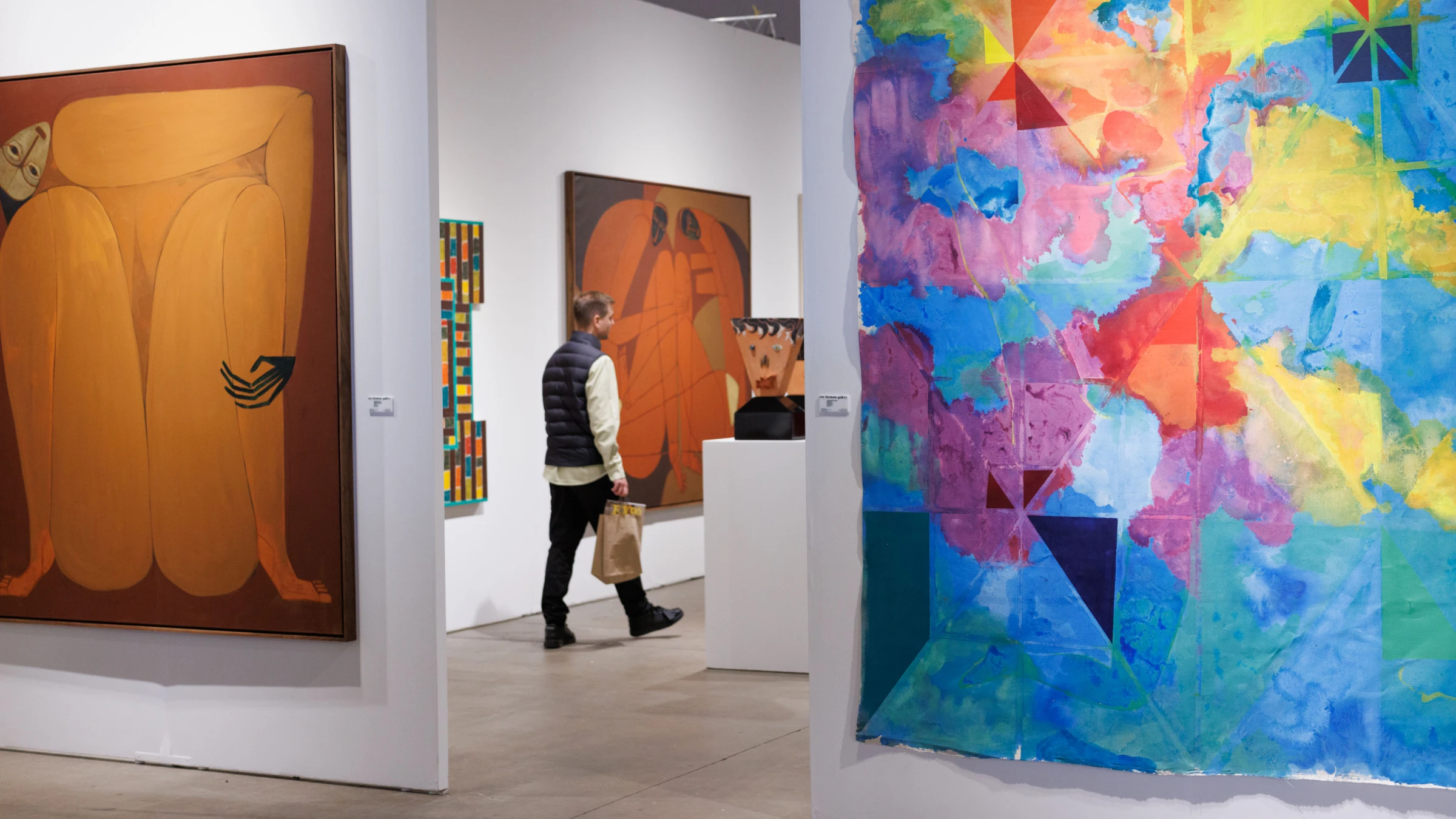
Mid-size fairs are no longer secondary terrain. In 2026, they are often where the best buying happens for collectors who value conviction over spectacle. As mega-fair costs rise and attention fragments, events like EXPO CHICAGO have become more selective, more navigable, and in many cases more intellectually coherent than larger counterparts. That is good news for buyers, but only if you arrive with a disciplined method.
This playbook is built for collectors, advisors, and institutional acquisition teams who want stronger outcomes at fairs with 100 to 180 exhibitors. The thesis is simple: at mid-size fairs, process is alpha. Most people still buy reactively. If you structure your preparation, floor strategy, and post-fair execution, you can buy better work, with less regret, and with stronger long-term portfolio logic.
1) Define the mission before you step on the floor. Start with a one-page mandate. What are you collecting over the next 18 months, and why? Limit yourself to two or three focus lanes, for example: early-career lens-based work with institutional traction, postwar abstraction underpriced relative to scholarship, or politically engaged figuration with museum relevance. If your mandate is vague, fair energy will choose for you.
2) Build a pre-fair longlist from official channels. Two weeks out, use the fair’s exhibitor list and programming pages. At Expo, that means starting with the announced galleries and related initiative updates. Flag 25 to 40 galleries, then narrow to a working list of 12 to 18 booths you will prioritize in person. Pre-commit to this list. Discovery still matters, but most strong purchases are prepared, not accidental.
3) Segment your budget into three buckets. Use a structure that prevents emotional overspend in the first hour. Bucket A: 50 to 60 percent for one high-conviction anchor work. Bucket B: 25 to 35 percent for one or two strategic mid-range works. Bucket C: 10 to 20 percent for experimental or emerging positions. This keeps optionality alive while preserving room for decisive action when the right work appears.
4) Define your quality test in advance. At the booth, ask five questions quickly. Is the work formally coherent at close and long viewing distance? Does it deepen with context, not only with explanation? Is the pricing consistent with the artist’s recent primary market and institutional trajectory? Does the gallery provide clear provenance and condition detail? Would you still want the work if social validation disappeared? If two answers are weak, move on.
5) Spend your first pass looking, not negotiating. Most fair mistakes happen when buyers negotiate before they understand comparative quality. Do a full first pass without asking for discounts. Photograph labels where allowed, note dimensions, mediums, edition details, and first-impression strengths or concerns. On the second pass, return only to shortlisted works. This simple sequencing improves decision quality more than any pricing tactic.
6) Interrogate context, not only object. At mid-size fairs, context creates value asymmetry. Ask galleries where this body of work sits in the artist’s timeline, what institutional conversations are active, and which works have gone to public collections. You are not looking for sales pressure talking points. You are looking for curatorial and market alignment signals that can be verified after the fair.
7) Use a disciplined hold protocol. If a work is serious but not yet decisive, request a short hold and set an explicit decision deadline. Do not hold multiple works from the same gallery without intent, and do not treat holds as free options. Professional behavior earns better access over time, including first look opportunities and more candid placement discussions.
8) Negotiate terms, not only sticker price. The blunt discount question is often the least useful move. Better negotiation variables include payment schedule, shipping support, framing inclusion, installation assistance, and, for editioned work, clarity on remaining availability. On high-conviction works, preserving relationship quality with the gallery can be worth more than extracting a marginal discount.
9) Verify paperwork before commitment. Request invoice detail that includes full work title, year, medium, dimensions, edition information where relevant, and clear seller entity data. For works with complex fabrication or installation requirements, ask for handling instructions in writing. If a work has conservation sensitivities, get a condition summary before payment is finalized.
10) Build a post-fair decision window. Your process should not end when the fair closes. Reserve 48 to 72 hours for final cross-checks: compare shortlisted works against your mandate, review any deferred offers, and evaluate opportunity cost against upcoming exhibitions and auctions. The collector advantage is not speed alone, it is speed with structure.
11) Track outcomes like an operator. Maintain a simple acquisition log with date, source, price, rationale, and expected holding horizon. Add fields for institutional signals, publication references, and collection-fit notes. Over time, this becomes an internal intelligence system. You will spot repeated biases, overpay patterns, and blind spots in artist category exposure.
12) For institutions: separate curatorial urgency from fair tempo. Museum teams should use fairs for concentrated viewing and relationship maintenance, but avoid importing fair urgency into acquisition committee logic. Where possible, pair fair scouting with studio visits, loan histories, and exhibition reviews before final votes. Mid-size fairs are excellent filters, not complete due diligence environments.
13) For first-time buyers: simplify your first three decisions. Set a hard maximum spend, choose one medium to focus on, and buy only from galleries that can provide clear artist context and clean paperwork. Avoid buying across four categories in one fair weekend. Concentration beats novelty when building early collection quality.
14) What to avoid in 2026. Avoid buying from booth theatrics without substance. Avoid works priced purely off recent social visibility. Avoid edition confusion where scarcity claims are unclear. Avoid emotional overexposure in the first VIP hour. Avoid outsourcing your eye to consensus chatter. Mid-size fairs reward calm pattern recognition.
Done well, a mid-size fair strategy can outperform higher-profile circuits on both quality and value. The floor is readable, the galleries are often hungrier to place work intelligently, and collectors who show up prepared can make decisions with unusual precision. Treat the fair as a compact operating environment, not a spectacle. Define your mission, control your pacing, and execute with discipline. That is how you buy better in 2026.