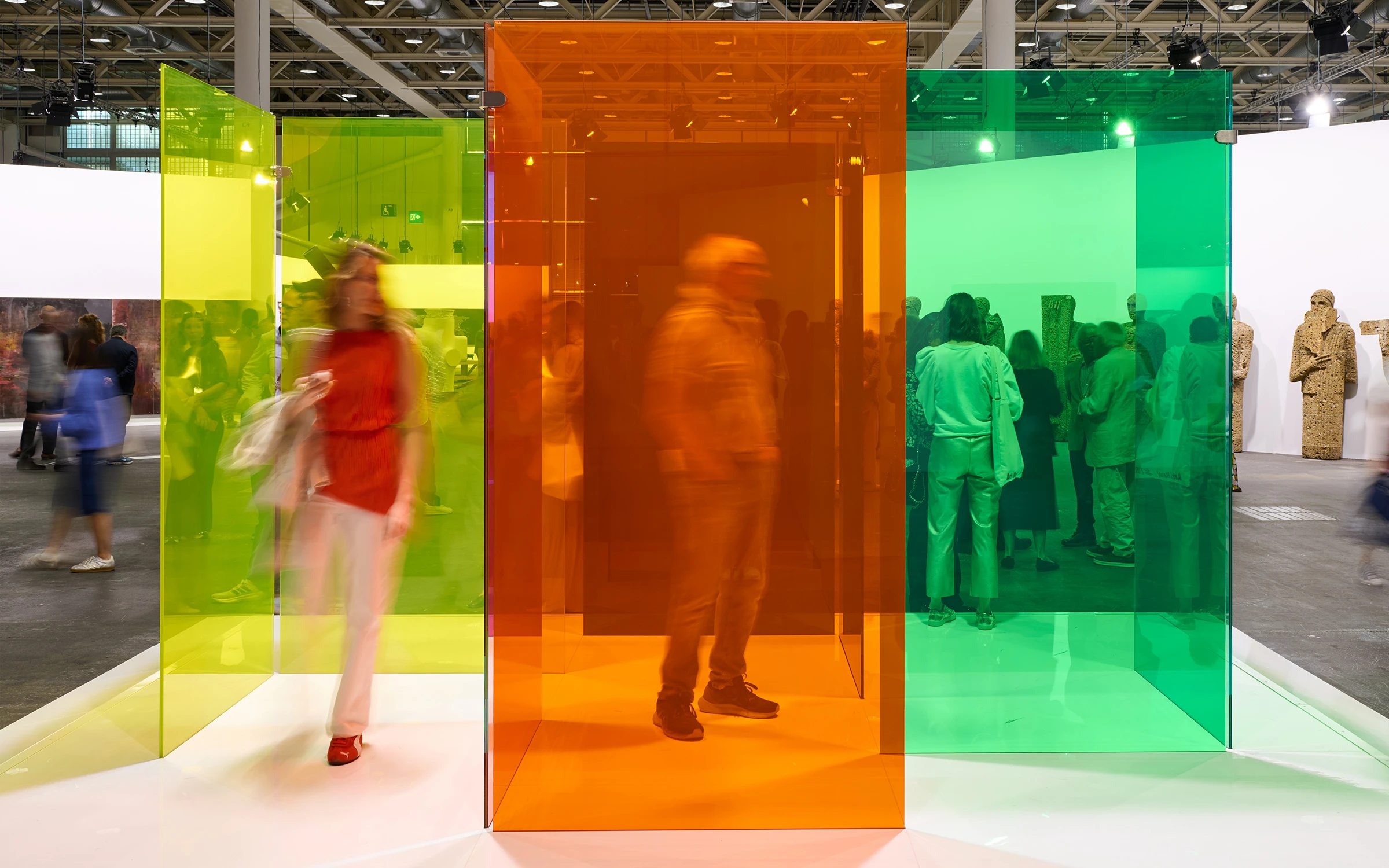
Collector Playbook: How to Evaluate an Art Fair Booth Before You Buy
A practical due diligence framework for collectors and curators to assess booth quality, pricing discipline, and long-term placement risk before committing capital at a fair.
Art fairs reward speed, but they punish sloppy process. The strongest collectors do not buy slower because they are hesitant, they buy faster because they have a repeatable framework. A booth can look coherent and still hide weak pricing logic, unstable provenance, or placement risk that will hurt an artist's market two years from now. This guide is a practical operating system for making better decisions in real time, whether you are building a private collection, buying for an institution, or advising trustees during preview week.
Step 1: Read the booth as a curatorial proposition, not a shopping wall. Start with intent. Ask what argument the gallery is making and whether the works support each other formally and historically. If the booth has no internal logic, that can signal opportunistic inventory dumping. A coherent booth does not need one medium or one artist, but it does need a discernible curatorial spine. If the gallery has an online artist roster, check it before committing, and compare what is on the stand to what the program usually defends on its own channels, such as Gagosian, Pace Gallery, or David Zwirner.
Step 2: Verify primary facts before discussing price. Confirm title, date, medium, dimensions, edition logic, and condition status in writing. For photography, digital media, and sculpture editions, ask for complete edition history, including artist's proofs and any format variants. For works with fabrication components, ask where and when fabrication occurred and whether replacement protocols exist. At fairs, staff often summarize quickly. Do not rely on summary. Require exact documentation and keep your own notes. A five-minute verification pass can prevent expensive ambiguity.
Step 3: Pressure-test pricing discipline. Ask how the quoted price compares to the artist's last three public placements and to the gallery's own recent primary pricing. You are not asking for private client names, you are asking for consistency. If a gallery cannot explain price architecture clearly, that is a warning sign. For secondary-market works, request past sale history, including the venue and date of any auction result that is being used as a benchmark. Use auction-house databases from Christie's, Sotheby's, and Phillips as reference points, not as sole valuation truth.
Step 4: Evaluate placement risk. Placement quality often matters more than discount percentage. Ask where comparable works have gone recently: museum acquisition, serious private collection, or short-flip buyer pool. A gallery that actively manages placement can protect an artist's long-term trajectory. A gallery that sells indiscriminately may deliver short-term liquidity and long-term instability. If you are buying emerging work, ask what institutional conversations are active and whether there is a realistic exhibition pipeline with venues such as MoMA, Tate, or regional museums with strong contemporary programs.
Step 5: Separate scarcity theater from real scarcity. Fair floors are designed to accelerate decision pressure. Phrases like one other collector is deciding can be true, partially true, or tactical. Ask a better question: what is actually scarce here, this exact work, this body of work, or this artist's current production cycle? If the work is unique and exhibition-level, delay can be expensive. If comparable works are available and the gallery can place you into a later sequence, you have negotiating leverage. Your goal is not to be immune to urgency, your goal is to identify whether the urgency is structural or performative.
Step 6: Inspect condition with museum standards. For painting, look for craquelure, edge wear, restoration traces, and transport stress. For works on paper, request mounting history, light exposure history, and conservation notes. For sculpture, verify structural joins, finish stability, and installation requirements. Ask who bears conservation risk between reservation and delivery. If you are buying at scale, ask your conservator to review documentation before final payment. At fair velocity, condition issues are often discovered too late, after shipping and insurance complications begin.
Step 7: Clarify legal and operational terms. Confirm invoice currency, tax treatment, export licensing, and shipping terms. For cross-border purchases, ask whether cultural property restrictions apply and whether CITES issues exist for organic materials. If a work includes software, moving image, or custom electronics, require explicit language on versioning, migration support, and replacement components. New-media purchases fail most often at the operations layer, not at the aesthetics layer.
Step 8: Build a fair-day decision stack. Before entering the hall, define three lists: must-buy profile, opportunistic profile, and pass conditions. Must-buy profile covers artists and formats that directly advance your collection thesis. Opportunistic profile covers works outside your plan that still meet quality thresholds. Pass conditions are hard stops, unclear provenance, unstable pricing, weak condition reporting, or documentation gaps. This stack prevents mood-based collecting and gives your advisor team a common language under time pressure.
Step 9: Use post-fair follow-through as part of the purchase decision. A good gallery relationship starts after the invoice. Evaluate responsiveness on documentation, shipping coordination, framing specifications, and installation planning. The way a gallery handles operations tells you as much as the booth itself. If communication degrades immediately after commitment, treat that as a market-signal for future transactions.
Step 10: Institutionalize your own data. Keep a private log of works considered, prices quoted, terms offered, and outcomes. Over multiple fair cycles, this becomes your most valuable tool. You will see which galleries quote consistently, which artists have disciplined placement, and where pricing drift appears before public indicators catch up. Collecting at a high level is not just taste, it is memory plus method.
Fairs will continue to evolve, from preview embargo models to tighter VIP access protocols at events like Art Basel Basel. Whatever the format, the core truth remains: disciplined buyers are not anti-emotion, they are pro-structure. The point of due diligence is not to remove instinct, it is to make sure instinct is backed by evidence when the room gets loud.