Collector Playbook: How to Build Signal, Not Noise, During a Biennale Year
A practical operating guide for collectors and curators making decisions across pavilions, galleries, and market chatter during Venice-cycle attention spikes.
Every biennale year creates the same operational problem for serious collectors and curators: information volume explodes, quality does not. If your process is weak, you leave with a phone full of installation shots, a stack of names, and almost no durable decisions. If your process is strong, you leave with a calibrated shortlist, verified relationships, and a clear acquisition or exhibition path.
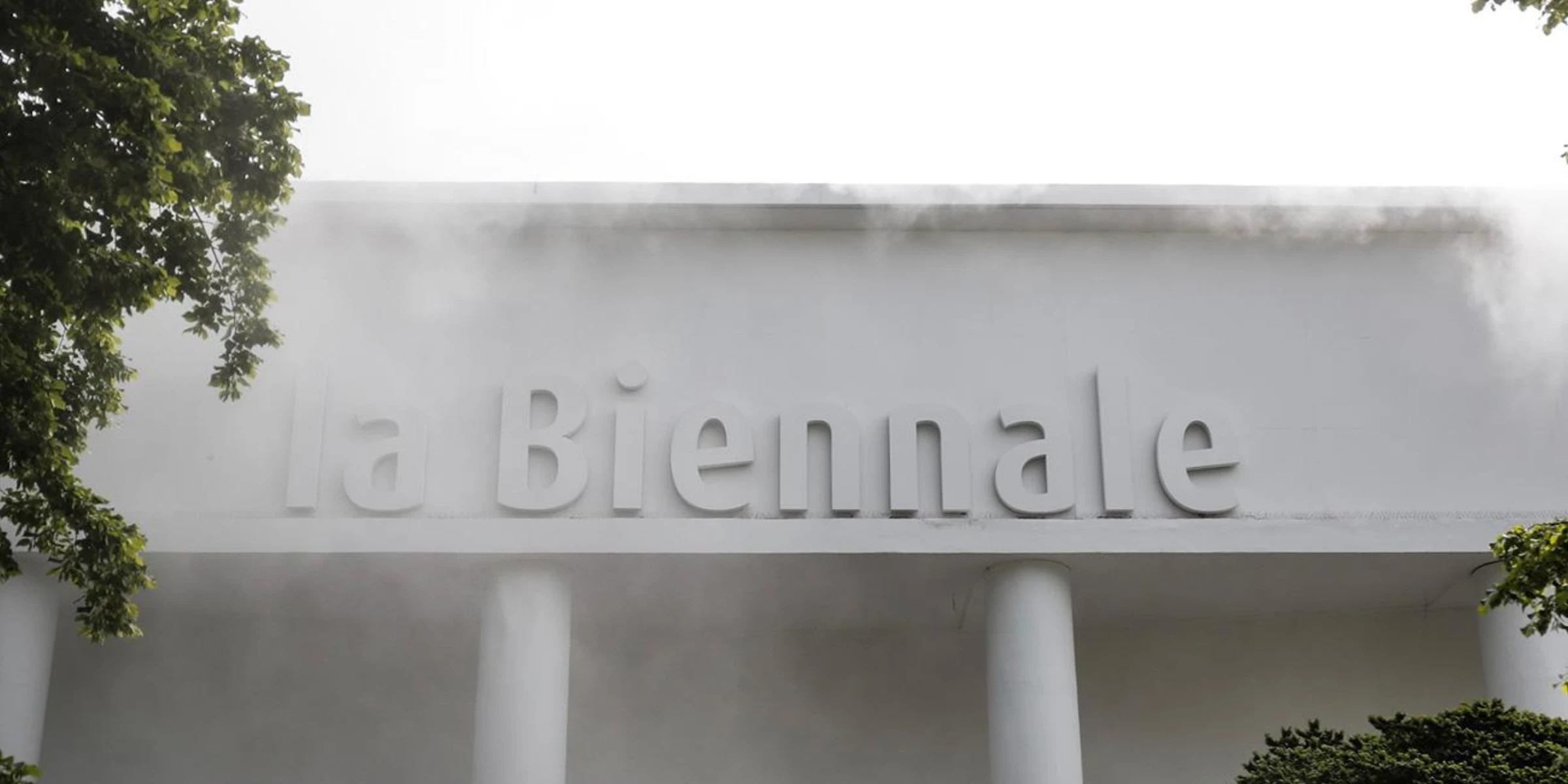
This playbook is built for the Venice cycle and similar mega-event moments anchored by La Biennale Arte, but the method generalizes to fairs, triennials, and institutional festival years.
1) Set a thesis before arrival. Do not arrive with only a mood. Write a one-page thesis with three lines: what formal problems you are tracking, what political or social stakes matter to your program, and what mediums your collection or institution is currently underweight in. A weak thesis produces random encounters. A sharp thesis turns the same encounters into evidence.
2) Build a two-layer viewing schedule. Layer A is non-negotiable: national pavilions, central exhibition nodes, and artists already on your strategic radar. Layer B is opportunistic: collateral shows, emerging spaces, and recommendations from trusted peers. Put strict time boxes around Layer A so Layer B can still happen. Over-scheduling destroys perception quality by day two.
3) Track works, not only artists. In biennale chatter, artists become brand tokens quickly. Your notes should foreground specific works: title, year, medium, dimensions, technical condition, installation dependencies, and whether the work has an institutional history. If a work cannot be described clearly after viewing, your conviction is probably social, not analytical.
4) Separate critical interest from acquisition interest. You can deeply admire a work that does not fit your collection architecture. Use three tags in your notes: C (critical relevance), A (acquisition fit), E (exhibition potential). This simple coding prevents expensive category mistakes and helps teams divide follow-up labor efficiently.
5) Demand provenance clarity early. For any live acquisition conversation, request basic diligence immediately: ownership history, edition details, fabrication records, and conservation constraints. If responses are slow or vague during a high-attention week, assume that post-event responsiveness will be slower. Fast, transparent documentation is a signal of operational maturity.
6) Price is context, not verdict. Biennale cycles intensify pricing narratives. Do not let urgency language replace comparative analysis. Benchmark against recent institutional placements, exhibition history, medium-specific market depth, and long-term artist trajectory. A high price may be rational if institutional adoption is structurally strong. A moderate price may still be poor value if support is shallow.
7) Use institutions as research partners, not status markers. Track programming from organizations that can shape discourse over a decade, not only a season. Follow curatorial trajectories at Tate, MoMA, and Guggenheim, then map where emerging artists are receiving repeat rather than one-off attention. Repeat institutional attention is usually a stronger signal than social media velocity.
8) Capture installation intelligence. Many biennale works are spatially complex, materially unstable, or dependent on custom AV systems. If you collect installation-heavy work, document technical requirements while the team is physically present. Ask for floor plans, equipment lists, and re-installation protocols. This protects both conservation outcomes and future loan viability.
9) Build a post-biennale decision calendar. Most weak decisions happen in the two weeks after return, when inbox pressure replaces field clarity. Pre-schedule three checkpoints: 72-hour triage, two-week diligence review, and 45-day commit or close. Deals that survive all three checkpoints usually have substance. Deals that collapse were often momentum purchases.
10) Maintain relationship discipline. Biennale weeks produce intense social overlap. Keep communication precise: what you saw, what you are evaluating, when you will respond, and what additional material you need. Professional clarity protects future access, even when you pass on a work.
A practical shortlist template<br/>For each shortlisted work, maintain: artist, work title, date, medium, asking terms, gallery contact, institutional history, conservation complexity, thesis fit score (1-5), and action status. If your team cannot fill this in within 48 hours, the work is not yet decision-ready.
What to avoid<br/>Avoid collecting from fear of missing out, adopting language you cannot defend in writing, and outsourcing conviction to group consensus. Also avoid false contrarianism. The goal is not to oppose market excitement automatically. The goal is to identify when excitement is supported by form, thought, and institutional durability.
Final rule<br/>A biennale year rewards attention, but it punishes undisciplined attention. Your edge is not seeing more than everyone else. Your edge is deciding better from what you saw. Build a repeatable method, then let taste do its work.
After-action review for teams<br/>Within a week of return, run a structured debrief with everyone who attended. Compare initial enthusiasm scores against diligence findings, identify where your thesis was too broad or too narrow, and document which information channels were most reliable on-site. This review compounds value over time. By the next cycle, your team will make faster decisions with less noise because your criteria are tested against real outcomes, not only intuition.